How Growing Companies Finance Expansion Across Time Zones
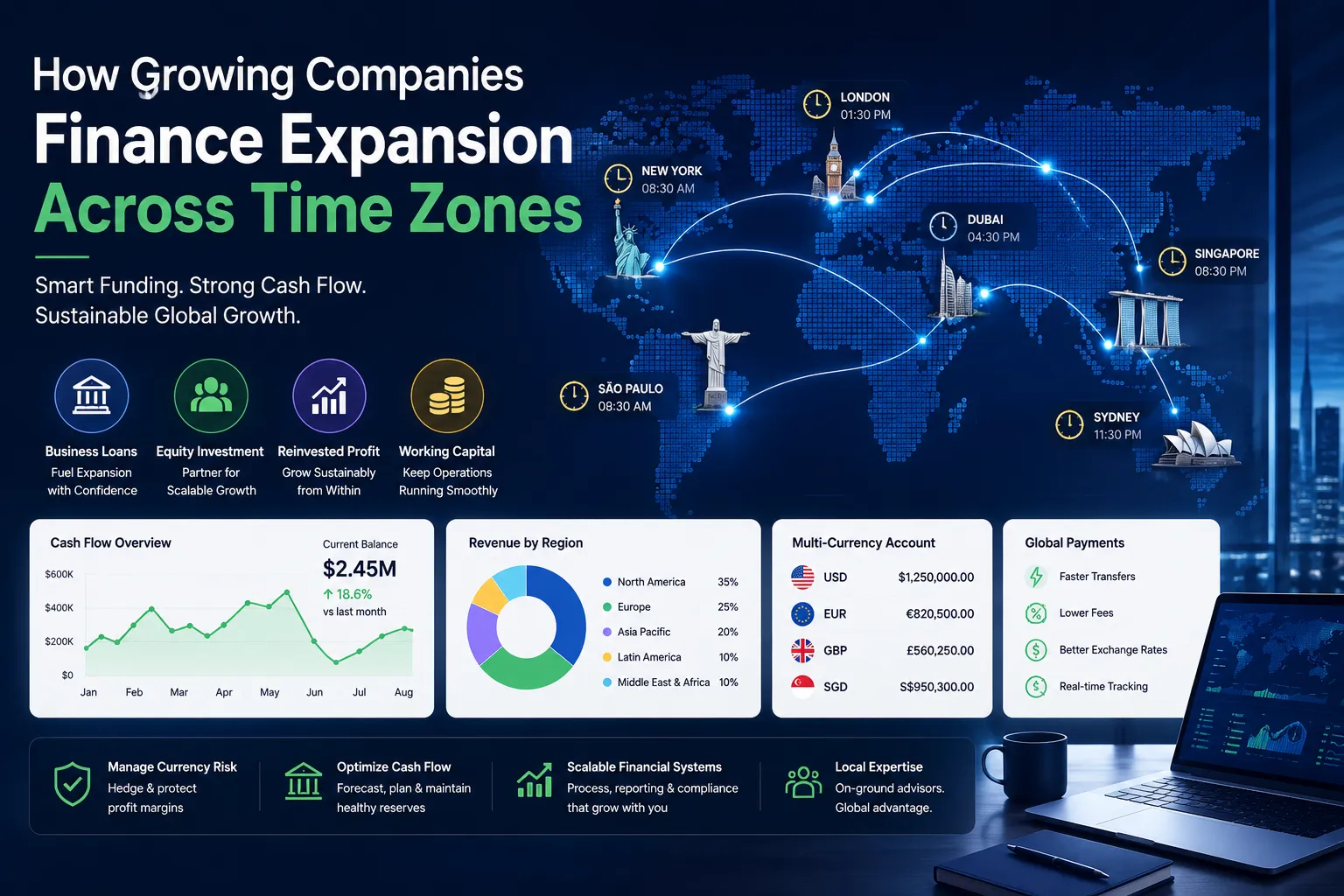
Growth rarely waits for the right moment. When a business outgrows its home market, the next step is often to reach customers in new regions and, before long, in new countries. The idea sounds simple. The execution is not. Expanding across time zones forces a company to rethink how money comes in, how it goes out, and how it stays available when teams are working while the head office sleeps. Funding that kind of growth takes planning, the right mix of capital, and systems that can handle distance. This article walks through how companies pay for expansion and keep their finances stable while operating in several places at once.
Why Cross-Border Growth Costs More Than Expected
Expansion looks cheaper on a spreadsheet than it turns out to be. New markets come with hidden costs that stack up fast. There are legal fees, local licenses, and tax filings in each country. There are salaries paid in different currencies and benefits shaped by local rules. Marketing has to be rebuilt for a new audience, and that work is rarely free.
Then there is the matter of timing. A company may spend heavily for months before a new region earns a single dollar. That gap between cost and return is the real test. Owners who underestimate it tend to run short on cash at the worst possible moment. The companies that succeed treat funding as a long runway, not a quick sprint.
Choosing the Right Mix of Funding
There is no single way to pay for growth. Most companies use a blend of sources, and the right blend depends on how fast they want to move and how much control they want to keep.
Debt Financing
Borrowing is one of the most common ways to fund expansion. It lets a company access a large sum now and pay it back gradually as the new market starts to produce income. The main appeal is control. The owners keep their full stake in the company and simply owe the lender a set amount over time.
This is where business loans come into the picture. A lender provides a fixed amount of money, and the borrower repays it in regular installments, usually with interest, over an agreed period. Some are tied to a specific purpose, such as buying equipment or opening a new location. Others are flexible and cover general costs. Rates and terms vary based on the lender, the amount borrowed, and the financial health of the business. The trade-off is clear. The money must be repaid whether the expansion works or not, so steady, predictable revenue makes this option far safer. For a broader look at how small business financing is structured, the U.S. Small Business Administration offers practical guidance at sba.gov.
Equity and Outside Investors
Some companies raise money by selling a share of the business. Investors hand over capital and, in return, own a piece of the company and a claim on future profits. This route can bring in large amounts quickly, and it does not require fixed repayments. That makes it appealing for businesses entering markets with uncertain timelines.
The cost is ownership. Every share sold is a slice of control and future earnings given away. Founders weigh that carefully. Equity money also tends to come with expectations, since investors want returns and often want a say in major decisions.
Reinvested Profit
The quietest funding source is the money a company already makes. Plowing profit back into the business avoids debt and keeps ownership intact. It is slower, and it limits how fast a company can move, but it carries the least risk. Many firms use reinvested profit to fund early, smaller steps before turning to outside money for the bigger ones.
Keeping Cash Flow Steady Across Time Zones
Funding the expansion is only half the job. Keeping cash flowing once teams are spread across the map is the other half, and it trips up plenty of growing companies.
When operations run around the clock, expenses do too. Payroll dates differ by country. Suppliers in one region expect payment while customers in another have not paid yet. The result can be a cash crunch even when the company is profitable on paper.
Good planning smooths this out. Forecasting cash needs by region helps owners see shortfalls before they happen. Holding a reserve of working capital gives the business room to cover gaps. Some companies open local bank accounts in each market so money does not have to travel far before it can be used. These steps sound small. Together, they keep the lights on when timing works against you.
Handling Currency and Payment Delays
Money behaves differently across borders. Exchange rates shift daily, and a deal that looked profitable can shrink if a currency moves the wrong way. Companies that ignore this risk often watch their margins quietly erode.
There are tools to manage it. Currency hedging lets a business lock in rates for future transactions, which adds predictability. Multi-currency accounts let firms hold and spend in several currencies without constant conversion fees. International payment platforms can move funds faster and cheaper than traditional bank transfers.
Payment delays deserve attention too. Cross-border invoices can take longer to clear, and that lag affects cash flow. Clear payment terms and reliable processing partners reduce the friction. For broader guidance on selling and operating in foreign markets, the International Trade Administration provides resources at trade.gov.
Building Financial Systems That Scale
Tools and funding matter, but the backbone of cross-border growth is a system that can keep up. As a company adds regions, its old way of tracking money usually starts to break.
Accounting software that handles multiple currencies and tax rules saves enormous time. Clear reporting gives leaders a single view of the whole operation rather than a scattered one. Standard processes for approvals, expenses, and payroll keep things consistent no matter where a team sits.
It also helps to bring in expertise. Local accountants and tax advisors understand rules that an outside team would miss. Their guidance prevents costly mistakes and keeps the company compliant. Strong systems do more than prevent problems. They free leaders to focus on the actual work of growing.
Final Thoughts
Financing expansion across time zones is less about finding one perfect source of money and more about building a plan that holds up under pressure. Growth pulls cash in many directions at once, and the companies that handle it well are the ones that prepare for the gaps before they appear. They match their funding to their pace, keep enough capital in reserve, and put systems in place that can stretch across borders. The work is demanding, but it is manageable with the right approach. A company that treats its finances as carefully as it treats its product gives itself the best chance to turn a bold move into lasting growth.