How to Get a Paper Route and Use Route Planning Tools to Save Time and Fuel
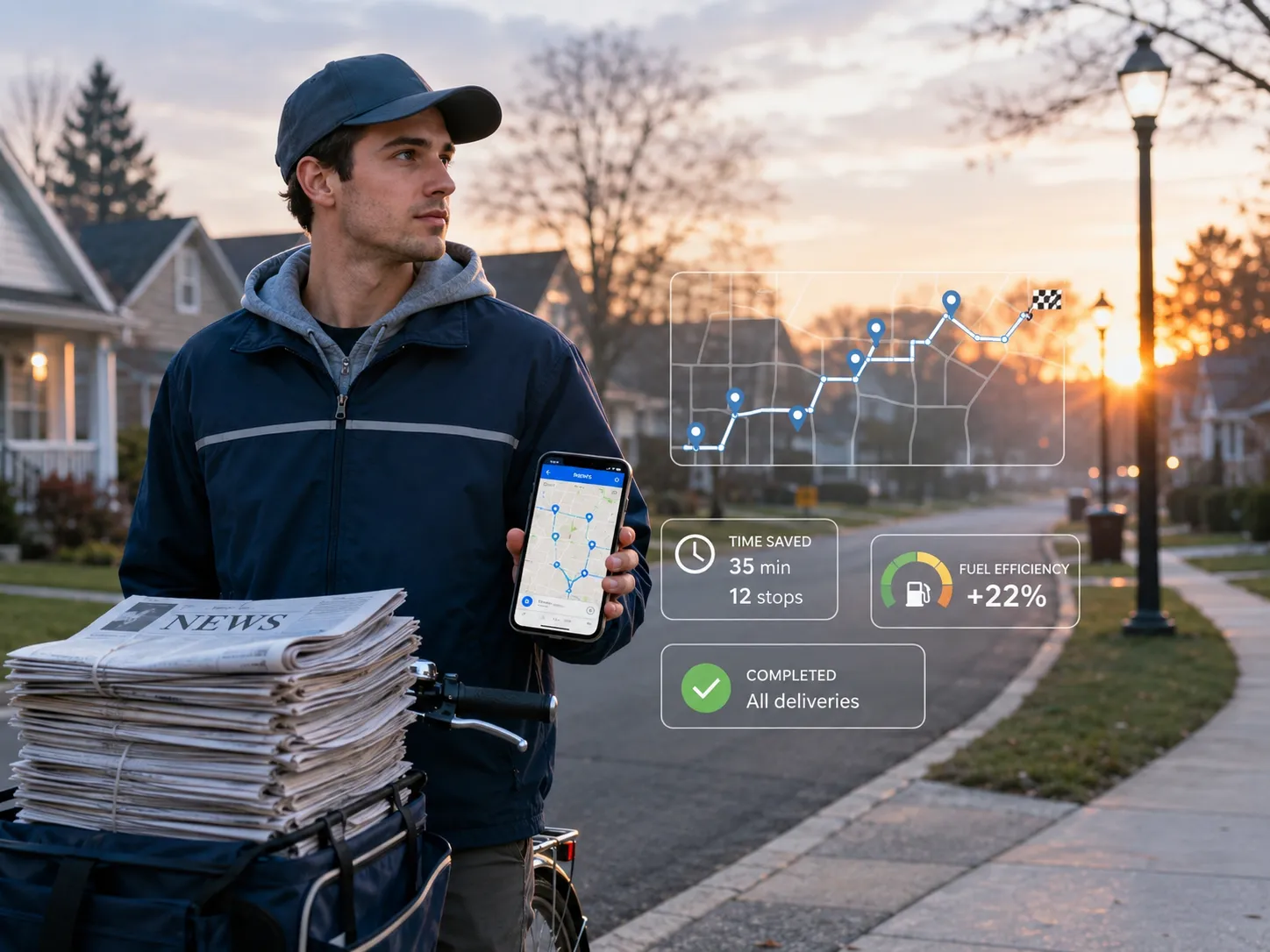
Starting a newspaper delivery route may seem simple at first.
You get a list of addresses, map your stops, and begin delivering. For years, this approach worked using memory, paper maps, or basic tools.
That simplicity does not hold up anymore.
Today, delivery professionals face tighter schedules, higher fuel costs, and increasing customer expectations. Simply knowing how to get a paper route is no longer enough. The real challenge is executing that route efficiently.
This is where route planning tools become critical. This blog explores:
- How to get a paper route
- The limitations of manual route planning
- How route planning tools help save time and fuel
What Does it Mean to Get a Newspaper Route?
A paper route refers to a structured delivery path assigned to a delivery professional, covering a fixed set of subscribers within a defined area.
How paper routes are typically created:
- Assign delivery zones based on geography
- Group customers within proximity
- Sequence deliveries manually
- Allocate routes to drivers
This process is often done using:
- Spreadsheets
- Basic maps
- Dispatcher experience
While this method works initially, it lacks optimization.
How to Get a Paper Route (Step-by-Step)
If you are starting or managing deliveries, here’s how newspaper routes are typically built:
- Define your Delivery Area
Break down regions into manageable zones based on:
- Distance
- Customer density
- Delivery frequency
- Collect and Organize Delivery Data
- Customer addresses
- Delivery frequency
- Special instructions
- Cluster Delivery Stops
Group nearby deliveries to reduce travel time.
- Sequence the Route
Most manual routes follow:
- Nearest-first logic
- Familiar paths
- This is where inefficiency begins.
- Assign Drivers and Execute
Routes are distributed and executed with minimal real-time adjustment.
At this stage, you have successfully created a newspaper route.
But it is not optimized.
The Problem with Manual Newspaper Routes
Manual routing fails because it cannot handle complexity. A delivery route is not just a list of stops.
It involves:
- Traffic conditions
- Delivery time windows
- Route sequencing
- Fuel efficiency
Manual planning cannot process all these variables simultaneously.
Common issues:
- Backtracking and unnecessary travel
- Longer delivery times
- Higher fuel consumption
- Missed delivery windows
Inefficient routes directly increase operational costs and travel time.
Why Route Planning Tools Are Essential After Getting a Route
Getting a newspaper route is only step one. Optimizing it is what drives efficiency. A route planning tool transforms a basic route into an intelligent delivery system.
How Route Planning Tools Save Time
- Automated Route Sequencing
Instead of manual guesswork, tools:
- Arrange stops in the most efficient order
- Eliminate unnecessary detours
Result: Faster route completion.
- Multi-stop Optimization
Route planning tools are designed for:
- Complex delivery networks
- High stop density
They calculate the best possible route across multiple constraints.
- Reduced Planning Time
Manual planning can take hours. Route optimization tools:
- Generate routes in minutes
- Eliminate dependency on manual effort
How Route Planning Tools Save Fuel
Fuel is one of the highest costs in newspaper delivery. Here’s how route planners reduce it:
- Shorter Travel Distances
Optimized routes reduce unnecessary miles.
- Smarter Navigation
Tools consider:
- Traffic
- Road restrictions
- Real-time conditions
- Reduced Idle Time
Better scheduling reduces waiting and delays. Fuel savings data:
- Fuel costs can drop significantly with route optimization
- Even basic optimization can improve fuel efficiency significantly per trip
Paper Route vs Optimized Route Planning
The difference between a manually planned paper route and an optimized one becomes clear when you compare how each impacts time, fuel efficiency, and overall delivery performance.
| Metric | Manual Newspaper Route | Optimized Route |
|---|---|---|
| Planning Time | High | Low |
| Fuel Consumption | High | Reduced |
| Delivery Speed | Slower | Faster |
| Route Accuracy | Inconsistent | Precise |
| Scalability | Limited | High |
The Bigger Advantage: Doing More in Less Time
Route optimization is not just about saving fuel.
It enables:
- More deliveries per shift
- Better driver utilization
- Reduced operational costs
Optimized routes increase stops per route and improve productivity by reducing travel time.
From Fixed Routes to Dynamic Delivery
Traditional newspaper routes are fixed. Modern delivery environments are not. Factors like:
- Traffic
- Customer changes
- Volume fluctuations
require dynamic routing.
Route planning tools adapt in real time, ensuring routes remain efficient throughout execution.
When Should You Start Using a Route Planning Tool?
You should move beyond manual routing if:
- Delivery volumes are increasing
- Fuel costs are rising
- Routes take longer to complete
- Drivers rely on memory instead of systems
If routing feels inconsistent, optimization is overdue.
The Future of Paper Delivery is Intelligent Routing
Routing is evolving beyond simple planning. Modern systems now:
- Use real-time data
- Optimize continuously
- Improve delivery performance over time
Route optimization today considers multiple constraints like traffic, delivery windows, and capacity to ensure efficiency.
The Real Shift is Not Digital. It’s Intelligent
Understanding how to get a paper route is only the beginning. The real advantage lies in how efficiently you execute it. Manual routing creates hidden inefficiencies that increase fuel costs, delay deliveries, and limit scalability.
Route planning tools like FarEye eliminate these inefficiencies by:
- Optimizing delivery sequences
- Reducing travel distance
- Improving time and fuel efficiency
As delivery demands grow, professionals who adopt intelligent route planning gain a clear operational advantage.
The question is not whether you should use route planning tools. It is how much efficiency you are willing to lose without them.