What the Epson F570 Does Differently That Appeals to Small-Format Sublimation Users
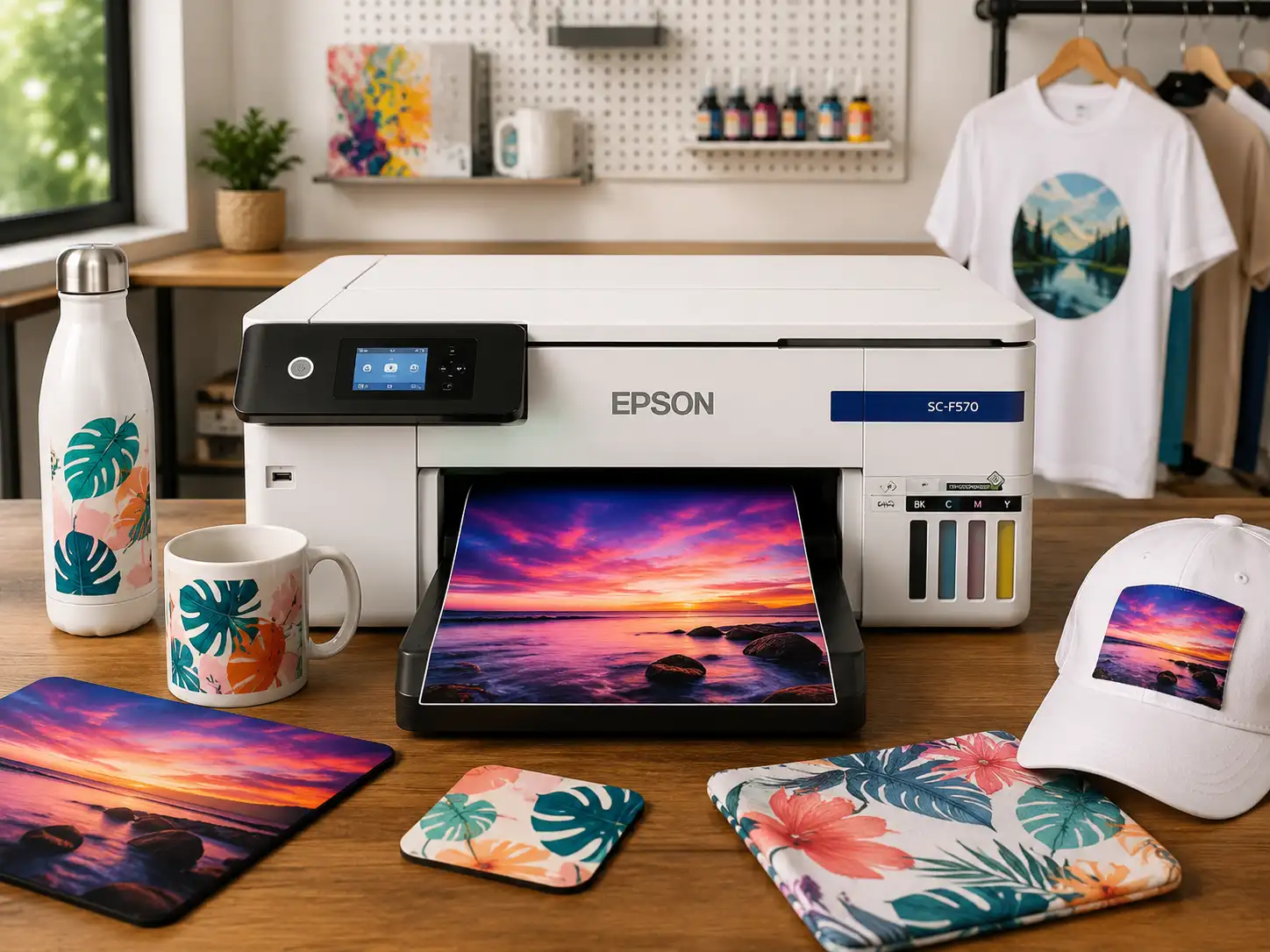
Small-format sublimation printing has quietly become a serious path for custom product creators, boutique studios, and home-based businesses trying to grow without heavy overhead. Plenty of capable machines exist in this space, but one model keeps coming up in conversations among users who want dependable output in a compact setup.
A Print Width That Fits Real Workflows
The Epson Surecolor F570 Sublimation Printer handles small-format production directly with a 24-inch maximum print width that fits comfortably without the cost or physical footprint that comes with a larger system. Sublimation at a smaller scale leaves little room for error—mugs, coasters, apparel panels, and keychains all require sharp ink transfer and repeatable color on every single run, and each design decision in this machine reflects what someone actually running a small studio faces on a typical workday.
Most small-format sublimation users have zero need for a 44-inch or 64-inch machine. The 24-inch width lands at a genuinely useful middle point, handling standard sublimation paper rolls while keeping the overall footprint compact enough for a studio table or a dedicated home workspace.
That same width has a direct effect on how much ink gets used per session. Smaller output means lower ink costs per run, and for businesses printing on demand rather than in volume, that difference adds up steadily over time.
Ink System Built for Dye Sublimation
The F570 runs on the UltraChrome DS ink set, a formulation developed specifically for dye-sublimation transfer work. This is not a converted inkjet machine running third-party sublimation ink as a workaround. The system was designed specifically for this purpose, which reduces the risk of clogging and improves color accuracy on transfer paper.
Color Consistency Across Materials
Sublimation transfers react differently depending on the substrate. Polyester fabric behaves nothing like a coated ceramic blank, and those gaps compound quickly when the ink system lacks proper calibration. The UltraChrome DS formulation accounts for these material differences, giving users more predictable results without having to manually rework color profiles between every job.
Speed That Matches Small-Batch Demands
Printing at up to 1.18 square meters per minute in standard mode, the F570 moves at a pace that fits small-batch production without strain. Users filling custom orders of 10 to 50 units per day will rarely find the printer becoming the slowest part of their operation.
Draft Mode for Proofing
A built-in draft mode lets users check designs quickly before running a full production batch. That option protects both time and transfer paper, two things any small operation has good reason to use carefully.
Low Maintenance Design
Printhead maintenance stays at the top of the concern list for most sublimation users, and for good reason. Clogged heads create downtime, and in a small operation, this downtime hits order fulfillment almost immediately. The F570 runs automatic cleaning cycles at regular intervals, which keeps dried ink from settling into the heads during slower periods between jobs.
Media Handling Without Complexity
Roll and cut sheet media are both supported, giving users genuine flexibility in how sublimation paper gets loaded. A straight paper path lowers the chance of jams, which matters more than it might seem when running thicker transfer sheets that tend to cause feed problems in curved systems.
Software and Color Management
Print Layout software comes included with the F570, covering color profiles, artwork resizing, and print parameters without needing a separate raster image processor. For small studios without a dedicated prepress person on staff, that capability closes a real gap in the path to consistent output.
Color profiles for common substrates are available through the manufacturer's support resources. Users can pull them down and apply them right away, skipping the time-consuming process of building profiles from scratch before the first real production run.
Conclusion
The F570 is a strong choice for small-format sublimation setups, addressing the friction points that affect actual daily production. Its purpose-built ink system, well-matched print width, and low-maintenance operation make it a sensible investment for creators who need consistent output without paying for capacity that will sit unused. For anyone starting or expanding a small sublimation operation, it fits the work in a way that genuinely makes sense.