7 Reasons Why Fast-Loading Websites Win in New York
If you live in New York, you know how chaotic the city can get. Everybody is chasing something (and they want it right now).
And when you’re working on your NYC web design, you always have to think about one thing. The audience.
New Yorkers don’t have the time or patience to wait for your site to load. They have business to attend to.
Plus, the competition is brutal. Every street corner has a business, every corner of the web has an alternative. In a place where people move fast, your website can't be polite and slow: it has to be focused and frictionless.
Today, we'll walk you through seven reasons why speed matters in New York specifically and give you practical tips you can apply today to make your site faster and more profitable.
Attention is Scarce (and Faster Sites Keep It)
New Yorkers have short attention spans and high expectations. If your homepage takes too long, people will just leave and find someone else. The data are stark: as page load time goes from 1 second to 3 seconds, the probability of a visitor bouncing rises about 32%.
In order to prevent this from happening, you can prioritize the above-the-fold content, so users immediately see something meaningful. Consider lazy-loading images below the fold and serving critical CSS in-line for a faster first paint.
Speed Directly Affects Conversions and Revenue
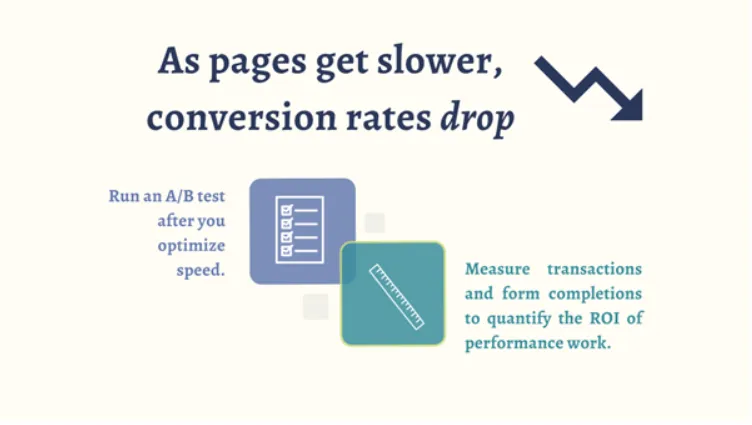
A few tenths of a second can make a difference in whether or not someone becomes a customer. Studies show (time and time again) that as pages get slower, conversion rates drop. In many cases, a one-second slowdown is associated with several percent fewer conversions. So basically, speed means dollars.
Run an A/B test after you optimize speed. You can measure transactions and form completions to quantify the ROI of performance work.
New Yorkers Judge Quality by Speed
Slow sites are seen as unprofessional in a city where everyone expects services and delivery to be instant. Half of your shoppers expect an e-commerce page to load in two seconds or less, and many will abandon it if it's longer. Speed communicates competence and makes your company look and feel more professional.
Let your speed enhancements be part of your brand narrative. If, say, your studio or shop promises to offer fast service, show off a short PageSpeed snapshot or mention "fast checkout" as one of its features.
Mobile Matters and Mobile Users are Impatient
NYC users are on phones mid-commute, at cafés, sitting on stoops. That’s why mobile load speed is critical. Mobile visitors have higher abandonment rates when loading drags on, and an incremental improvement - even 0.1s in certain contexts - can lower bounce for lead-generation pages.
Serve responsive, appropriately sized images by using modern formats like WebP/AVIF, avoid render-blocking scripts on mobile, and enable AMP or fast fallback UI for article pages where it makes sense.
SEO and Discoverability Improve
Google uses page experience signals like Core Web Vitals in their rankings. It's still about great content, but the speed and stability of your pages help make sure that search engines actually show these pages higher. And local searches in NYC are intensely competitive. Faster pages can rank better for local intent queries.
Watch the Core Web Vitals in the Search Console (Largest Contentful Paint, Cumulative Layout Shift, and Interaction to Next Paint) and fix the images, third-party scripts, and heavy layout shifts.
Better UX Reduces Support, Returns, and Friction
Fast pages mean fewer annoyed customers, fewer abandoned carts, and fewer “where’s my order?” tickets. In NYC, where expectations and costs are high, reducing friction saves time and money on the operations side.
You can simplify the critical paths to improve conversion, search → product → cart → checkout. Remove fields you don’t need. Provide predictive suggestions and keep the checkout process in a single, fast flow. At the same time, incorporating live-chat and real-time support during checkout can help reduce cart abandonment and improve conversions, while providing practical guidance and enhancing the overall user experience
Fast Sites Scale (Technically and Commercially)
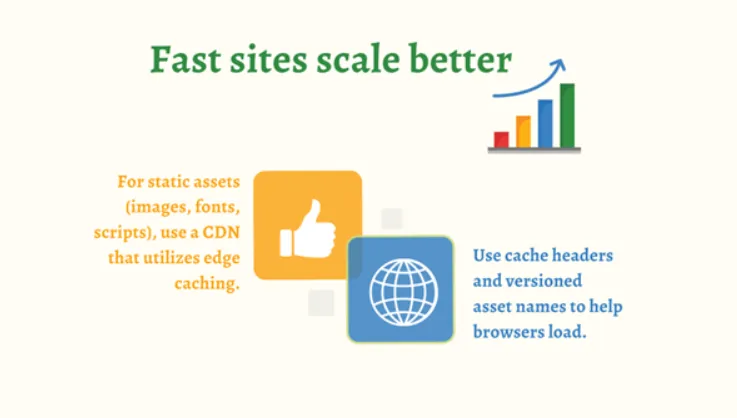
When your site is lean, it's easier to maintain, scale, and evolve. Speed improvements often coincide with better architecture: smaller bundles, smarter caching, and CDNs - all of which make your platform more resilient during traffic spikes. Think product launch and promotion.
For static assets (images, fonts, scripts), use a CDN that utilizes edge caching. Use cache headers and versioned asset names to let browsers/CDNs cache aggressively without breaking updates.
Fast-loading Sites Build Trust (in a city where trust is hard to earn)
One thing people often overlook is how much trust is tied to speed. In New York, scams, pop-ups, and sketchy ads are everywhere. Users subconsciously judge a site’s legitimacy by how fast it loads.
A fast website feels stable, intentional, and professional. Think about it: if a page hangs for four seconds, most users instantly wonder if the link is broken, if the business is outdated, or if the site is stuffed with trackers.
Slow feels suspicious. But when a page loads instantly, the user’s brain interprets it as safe and credible, which makes every action afterward more likely (staying, clicking, buying, or reaching out).
Quick list to get you started
- Measure first. Utilize PageSpeed Insights and real-user monitoring (RUM) to get a baseline.
- Optimize images: Use modern formats, compress them, and use responsive sizing.
- Trim third-party scripts. Remove or defer any analytics or widgets that block rendering.
- Serve critical content fast. Inline critical CSS, defer non-essential JS.
- Use a CDN. Ensure that static assets are served from an edge close to NYC and your user base.
- Enable caching and HTTP/2 or HTTP/3. Faster transport = happier users.
- Monitor continuously. Set alerts for regressions. Performance slips can sneak back in through new features.
Some stats show that 47% of consumers expect an eCommerce page to load in two seconds or less; slow = abandoned. This helps us understand that speed is a customer expectation, not an optional nice-to-have.
Speed is Customer Service, Expressed in Milliseconds
In New York, everything is fast (except for patience). A fast site isn't only a technical win, it's a cultural one. It tells visitors you respect their time, you run things professionally, and you care about the details that make a big difference.
First things first. Fix the speed problems that block your key business goals; polish later. Do that, and you'll win attention, clicks, and customers on this block and the next.
We wish you the best of luck with your business. We know you have it in you.