Best HR Technologies for Simplifying Remote Team Management in the UK
Remote work didn't break HR, but it definitely exposed every crack in outdated people management systems. The best HR technologies are the ones that hold distributed teams together without burying HR managers in manual admin or compliance guesswork.
Keeping up with UK employment law changes alone is a full-time job. When you add multi-location attendance tracking and employee document management, the wrong platform can quickly slow everything down.
After reviewing the leading platforms in this space, this guide breaks down the five tools worth your attention right now.
The Research Approach for This Ranking
Each platform was assessed using publicly available material gathered across review sites, vendor websites, HR analyst directories, and real user case studies.
Only companies with a documented track record in human resources technology made the final list. Pricing details, feature depth, and verified user sentiment all factored into the evaluation.
→ See the full research breakdown
- SenseHR: Best for SMEs requiring customisable HR management and automation
- BambooHR: Best for small to mid-market companies seeking HR management
- Zoho People: Best for small to mid-sized businesses managing HR operations
- Gusto: Best for small to mid-market businesses managing payroll and HR
- Namely: Best for small to mid-sized companies seeking integrated HR and payroll management
Why HR Technologies Matter for Your Business
Managing a remote team without the right people platform is a bit like trying to run payroll on a spreadsheet during a software audit. It works until it really doesn't.
The challenge for most UK businesses isn't finding an HR tool. It's finding one that connects employee records, leave tracking, attendance data, and compliance documentation in one place without losing anything in the transfer.
Employment law requirements across England, Scotland, and Wales shift regularly, and staying ahead of those changes requires a system that keeps your processes current.
The right HR technology cuts time-to-hire, improves payroll accuracy, and supports genuine self-service adoption, allowing your HR team to focus on people rather than paperwork.
Top 5 HR Technologies: Breakdown and Comparison
Note: All data in this table is sourced from review platforms and the official websites of the listed companies.
| Company Name | Years Operating | Team Size | Headquartered In |
|---|---|---|---|
| SenseHR | Est. 2022 | 11–50 employees | Epworth, England |
| BambooHR | Est. 2008 | 1,627 | Draper, Utah |
| Zoho People | Est. 1996 | 17,856 | Chennai, India |
| Gusto | Est. 2012 | 4,300 | San Francisco, California |
| Namely | Est. 2012 | 500+ | New York, New York |
1. SenseHR - Best for SMEs Requiring Customisable HR Management and Automation
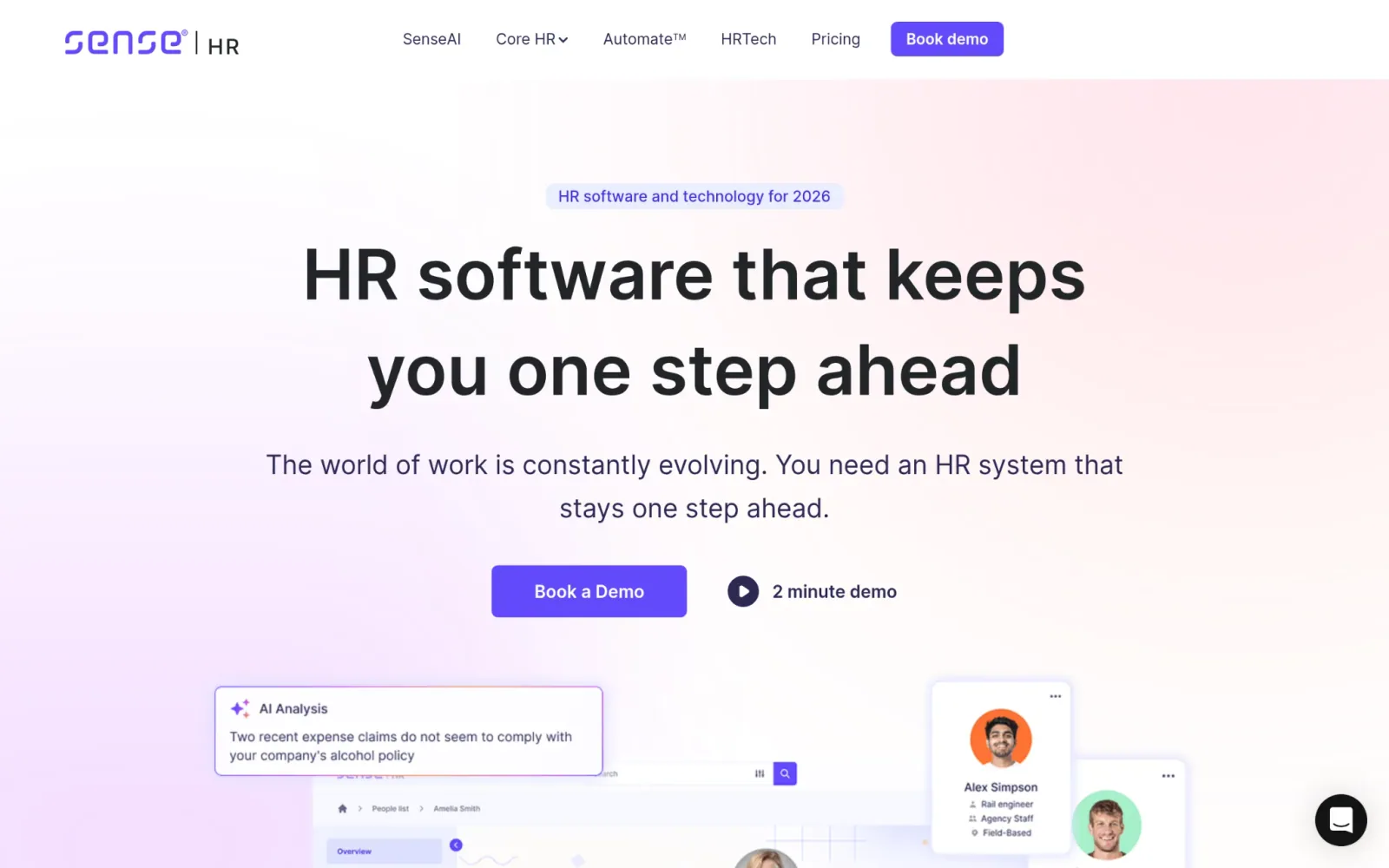
What Does SenseHR Do?
For teams managing a distributed or frontline workforce, the real value of good software becomes obvious when you see how much administration it removes.
Businesses looking for software for centralizing HR management can use SenseHR to bring employee records, holiday tracking, document storage, electronic signatures, and time and attendance monitoring into one platform.
SenseHR also offers AI co-pilots for HR administrators and wearable hardware for frontline workers, which is a genuinely interesting angle in a crowded market.
Built by practitioners with more than 17 years of HR systems experience, the platform is priced from £2 per employee per month, making it approachable for growing businesses.
Why Does SenseHR Stand Out?
The combination of AI co-pilot tools and wearable hardware for frontline workers sets SenseHR apart from platforms that focus only on desk-based employees.
For SMEs across construction, healthcare, and manufacturing, that kind of flexibility is rare and difficult to match.
Summary of Real User Reviews
From what the available information shows, SenseHR draws strong interest from organisations that need customisable workflows without enterprise-level pricing.
Users point to the platform's adaptability and ease of setup as consistent strengths, particularly for businesses that have previously outgrown simpler tools.
2. BambooHR - Best for Small to Mid-Market Companies Seeking HR Management
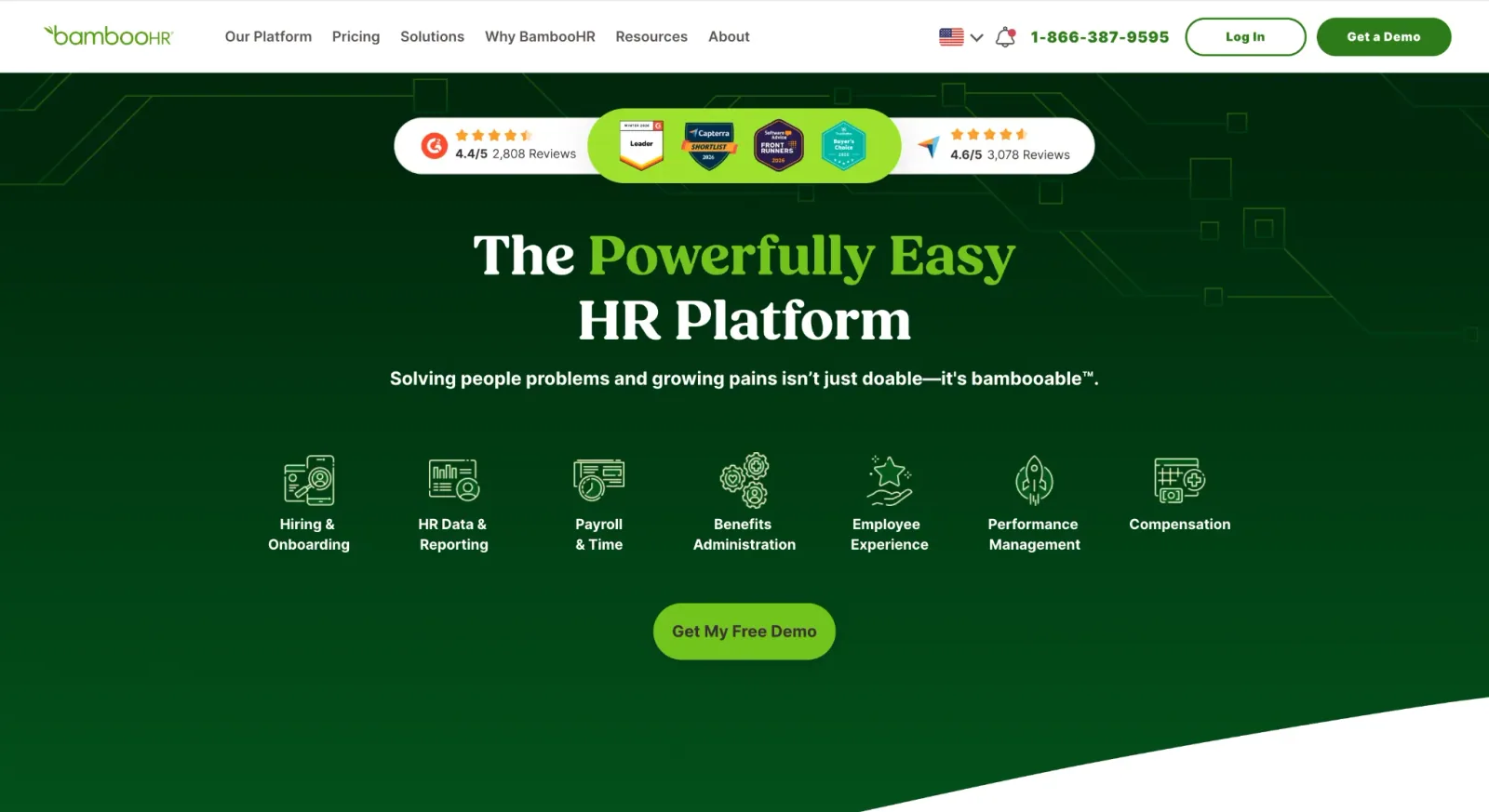
What Does BambooHR Do?
BambooHR is one of the most recognised names in HR software, and with good reason.
The company serves more than 34,000 customers across 190 countries, which indicates that the platform can support organisations across different industries and business sizes.
Its suite covers:
- HR information management
- Applicant tracking
- Payroll
- Benefits administration
- Performance management
- Compensation planning
These functions sit inside a unified data model. Embedded AI tools and a connected ecosystem help HR data remain in one place instead of being scattered across disconnected platforms.
BambooHR clients include Quora, Le Creuset, and the New York City Ballet, representing a broad range of sectors.
Why Does BambooHR Stand Out?
BambooHR solves the data fragmentation problem that affects HR teams using separate systems for hiring, payroll, and performance reviews.
Its native unified data model means HR managers do not have to manually reconcile records between platforms, which is often where payroll and employee data errors appear.
Summary of Real User Reviews
BambooHR received a 2025/26 Cloud Award for Best HR Tech, and user sentiment generally reflects that recognition.
Reviewers frequently mention how straightforward the platform is to navigate. The all-in-one approach also receives consistent praise from HR teams that previously had to manage multiple tools.
The volume of positive reviews across different review platforms is difficult to ignore.
3. Zoho People - Best for Small to Mid-Sized Businesses HR Operations
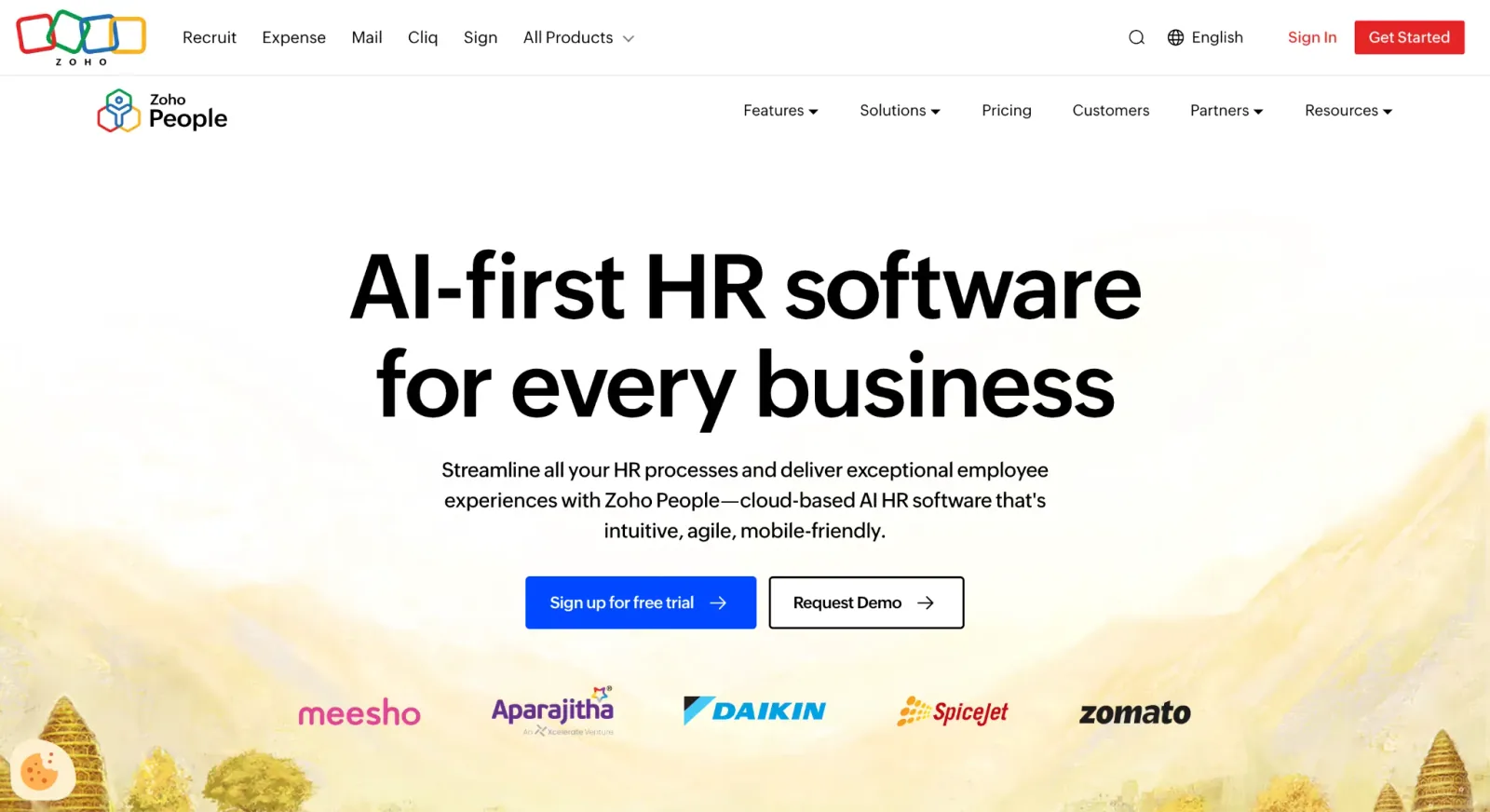
What Does Zoho People Do?
Zoho People sits within the broader Zoho ecosystem and provides a wide range of HR features, including:
- Employee induction
- Time and attendance management
- Performance management
- Learning management
- HR help desk functionality
- Document management
- Employee engagement tools
- Reporting
The platform's starting price of £1.13 per user per month, along with a free plan for up to five users, makes it one of the most affordable options in this comparison.
Zoho products are also trusted by more than 120 million users globally, which is a figure that tends to attract attention during vendor shortlisting discussions.
Why Does Zoho People Stand Out?
Zoho People directly addresses the affordability barrier that stops smaller businesses from adopting a proper HR system.
Its commitment to providing a platform with no ads or third-party data sharing is also unusual among SaaS HR platforms. This approach can build trust with HR teams handling sensitive employee information.
Summary of Real User Reviews
Research indicates that Zoho People users consistently identify value for money and customisability as the main reasons they continue using the platform.
Its privacy-focused approach also appears regularly in reviews, particularly among businesses with stricter data-handling requirements.
The main concern is that the platform's broad feature set can require considerable configuration during the initial setup.
4. Gusto - Best for Small to Midmarket Business Payroll and HR Management
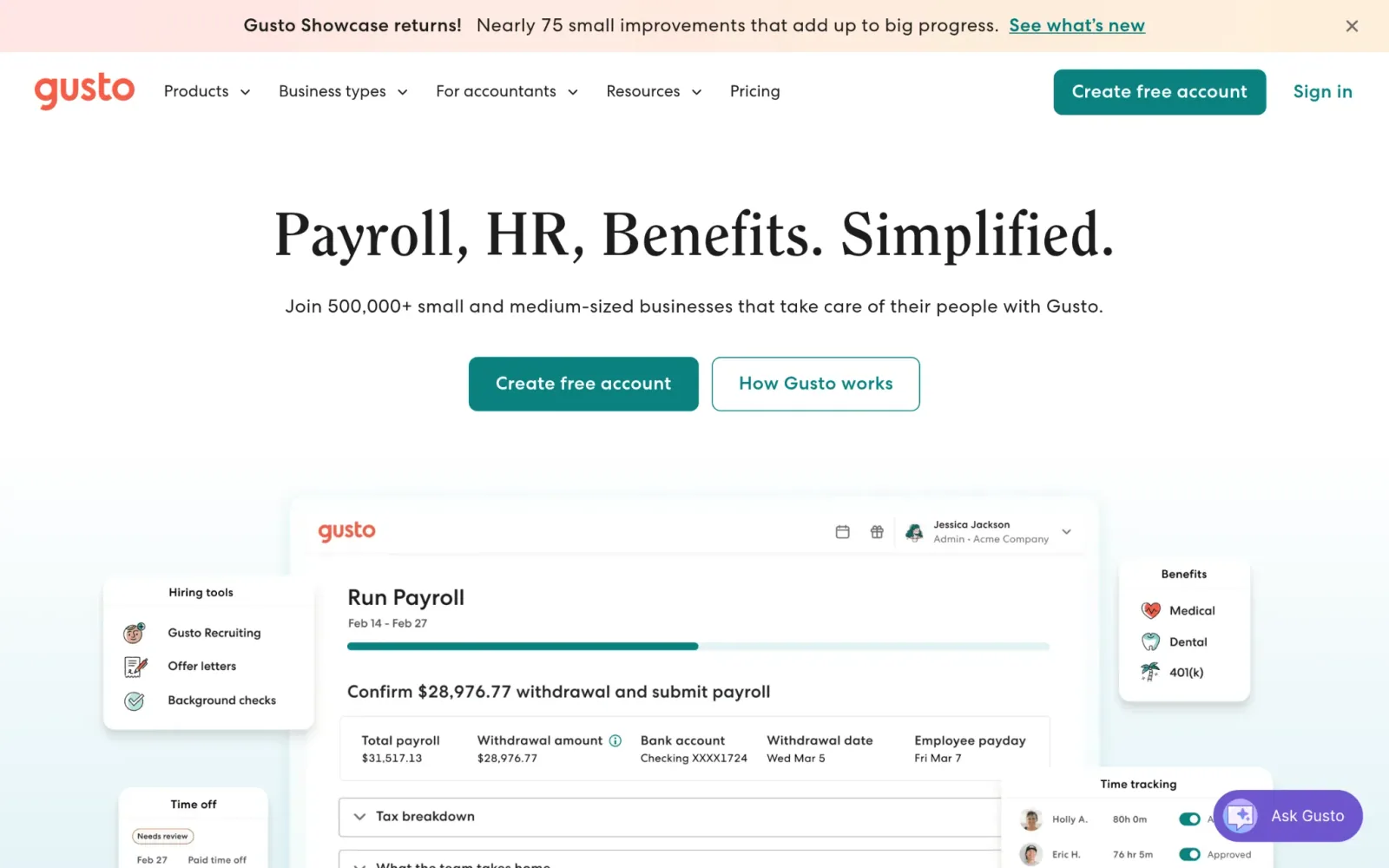
What Does Gusto Do?
Gusto built its reputation on making payroll genuinely painless, and the numbers back that up: 72% of their customers reportedly spend five minutes or less on payroll per pay period. The platform covers payroll processing, employee induction, health insurance, dental and vision enrolment, and access to 401K and workers' compensation through third-party providers. They serve over 400,000 businesses, and their 2024 revenue of £583.2M reflects strong, sustained demand. Worth noting: Gusto operates primarily in the United States, so UK businesses should factor that into their evaluation (think US-specific benefits infrastructure).
Why Does Gusto Stand Out for HR Technologies?
Gusto tackles the payroll accuracy problem head-on by consolidating everything that touches pay into one platform, removing the manual steps where errors typically occur. That kind of operational tightness is what earns awards like Best Overall Payroll Processing Software from TechRepublic, and it explains why small business uptake stays strong.
Summary of Real User Reviews:
Reviews on Gusto lean heavily positive around speed and simplicity, especially for businesses running payroll for the first time without a dedicated HR team. The induction experience is frequently mentioned as a standout. Some users flag that more complex benefit scenarios push the platform's limits, but for payroll needs, it's consistently well-rated.
5. Namely - Best for Small to Mid-Sized Companies Seeking Integrated HR and Payroll Management
What Does Namely Do?
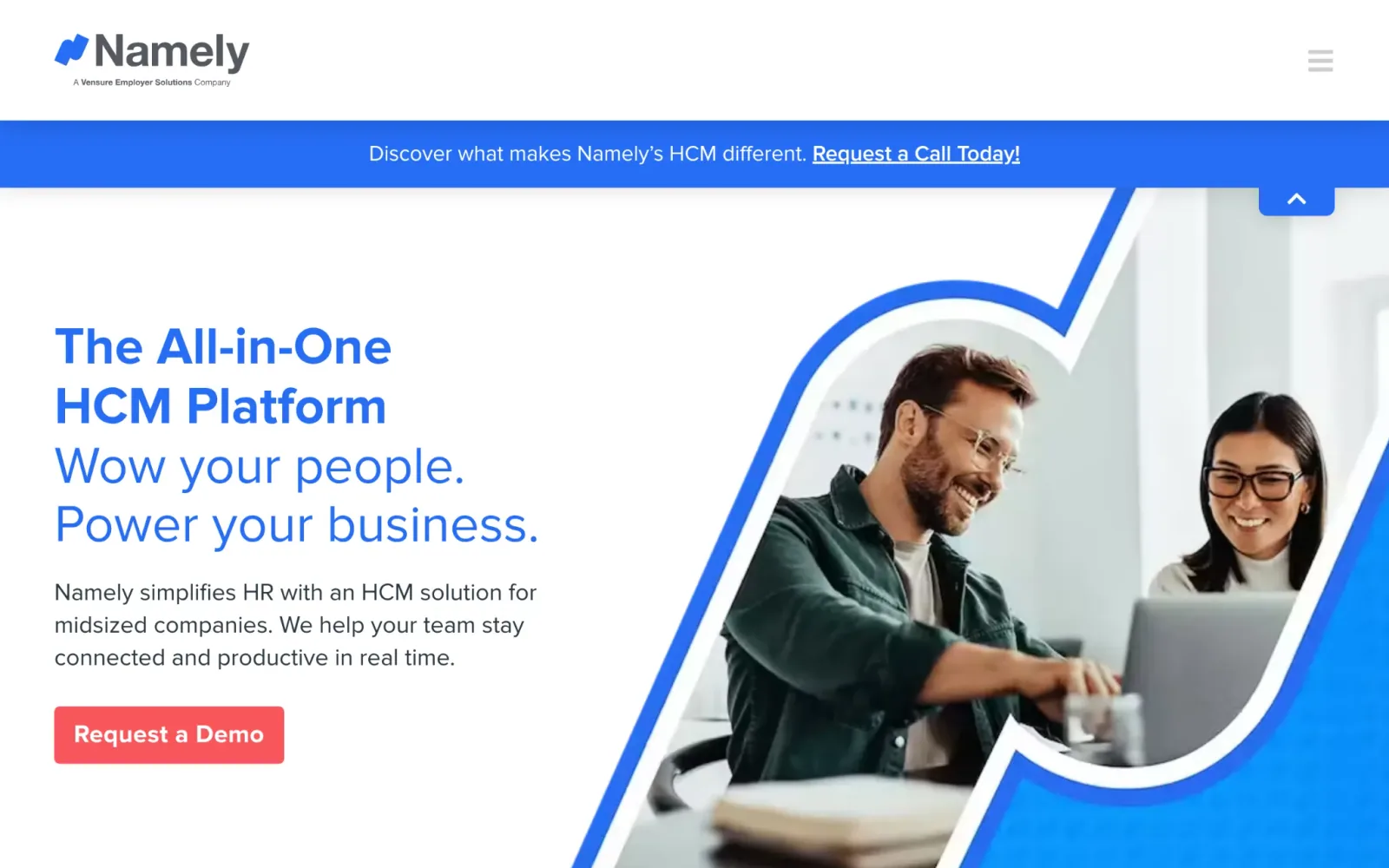
Namely positions itself as an HR platform that employees actually want to use, and the social-media-style interface is a deliberate design choice to boost day-to-day engagement. The platform brings HR, payroll, benefits, and talent management together in a cloud-native system built for small to mid-sized companies. They also offer managed services where their team handles HR, payroll, and benefits processes directly on behalf of clients, which is an option most pure-software vendors don't provide. They serve over 1,000 customers and were recognised as Overall HR Solution Provider of the Year at the 2022 RemoteTech Breakthrough Awards.
Why Does Namely Stand Out for HR Technologies?
Namely addresses the employee adoption problem that trips up so many HR platforms by designing the interface around how people actually interact with social tools rather than traditional enterprise software. That design thinking translates directly into higher self-service completion rates, which reduces the admin burden on HR teams over time.
Summary of Real User Reviews:
Reviewers regularly mention how approachable Namely feels compared to more traditional HR platforms, and the managed services option earns specific praise from HR managers who are stretched thin. From what the reviews show, companies that use the managed services layer report a meaningful reduction in compliance-related stress. The trade-off is that Namely's feature depth may not match what larger enterprises need.
Research Methodology and Selection Process
Initial Data Collection
The starting point for this ranking was the creation of a broad list of HR technology platforms operating in the UK and international markets.
Sources included:
- HR software directories
- Analyst review platforms
- Vendor comparison websites
- Published organisational case studies
- Documented HR technology evaluations
Both established platforms and newer entrants were considered, with no automatic exclusions based on company size or the number of years they had been operating.
The goal was to capture a realistic view of what is available to HR teams rather than defaulting to the most heavily advertised brands.
Shortlisting Phase
Platforms without verifiable information were removed first.
This included vendors relying exclusively on marketing claims without supporting user reviews, client references, or third-party recognition.
Review patterns across multiple platforms were then analysed to determine whether positive sentiment was consistent or concentrated within a narrow period.
Platforms with limited review histories or suspicious patterns of uniformly perfect scores were deprioritised in favour of options with more varied and credible feedback.
Verification of Claims
Feature claims published on vendor websites were cross-checked against reports from actual users in verified reviews.
For example, when a vendor claimed to provide strong payroll accuracy, that claim was compared against user comments about error rates and customer support experiences.
Claims related to compliance support were also compared against documented results rather than accepted at face value.
This process helped filter out platforms that market themselves effectively but deliver inconsistent results.
Authority and Industry Contribution
Platforms that had received formal recognition from established HR industry bodies, analyst firms, or technology award programmes were noted during the assessment.
Recognition from organisations such as SoftwareReviews, TechRepublic, RemoteTech Breakthrough, and Deloitte was considered where relevant.
Publication mentions and contributions to industry research provided additional weighting.
This assessment helped identify platforms that had earned credibility beyond their own marketing materials.
HR Technology-Specific Evidence
The final assessment focused on evidence that each platform had been applied to real HR management challenges.
This included:
- Dedicated feature pages for HR workflows
- Verified reviews from HR professionals
- Case studies showing measurable results
- Reductions in administrative time
- Improvements in payroll accuracy
- Better employee self-service adoption
Platforms demonstrating clear alignment with the realities of managing remote teams, tracking compliance, and supporting employee self-service were ranked more favourably than platforms offering broad but shallow functionality.
How to Choose the Right HR Technology
Choosing an HR platform for a remote team requires more deliberate consideration than a standard software purchase.
The wrong platform can create more administrative work than it removes. Here is what to evaluate before committing.
Industry and Domain Experience
Look for platforms built by practitioners who understand HR operations, not only software engineers who have studied the industry from the outside.
Vendors with genuine HR sector experience are more likely to develop features that reflect how HR teams actually work.
Features and Service Offerings
Map the platform's features against your organisation's specific workflows.
Employee records, leave management, payroll, performance tracking, and compliance documentation should connect without requiring manual data transfers.
Pricing Structure
Per-employee pricing models, such as SenseHR's £2 per-person structure, may be easier for growing teams to budget than flat-fee tiers that require businesses to upgrade before they need additional features.
Results Measurement
A credible HR platform should help you measure factors such as:
- Payroll accuracy
- Employee self-service adoption
- Administrative time savings
- Recruitment efficiency
- Compliance completion rates
When a vendor cannot explain how organisations can measure their return on investment, it may be worth questioning whether the platform can provide meaningful operational improvements.
Industry Knowledge and Compliance
UK employment law, GDPR requirements, and sector-specific obligations require a platform that can keep pace with regulatory changes.
Healthcare credentialing, union requirements, and industry-specific documentation should not depend entirely on HR managers manually updating every process.
Bottom Line
Getting HR technology right for a remote team is less about choosing the platform with the most features and more about finding one that fits the way your organisation operates.
SenseHR works well for UK SMEs that need flexibility without enterprise-level costs. BambooHR suits teams looking for a unified HR system, while Zoho People stands out for affordability.
Gusto is particularly strong in payroll simplicity, although it is primarily designed for the US market. Namely stands out for its employee-facing design and managed service options.
As remote work becomes a standard operating model, platforms that connect compliance, employee data, and people management in one system will continue to pull ahead.