8 Best B2B Enterprise Proxies in 2026
Enterprise data collection has become a core part of market intelligence, AI development, SEO monitoring, compliance tracking, and automation workflows. According to Research Nester, the web scraping software market is projected to reach approximately $875 million in 2026 as organizations continue investing in automation, competitive intelligence, and large-scale data collection systems.
As data operations expand across regions, business units, and automation platforms, proxy infrastructure becomes a critical layer for managing access, session behavior, geographic targeting, and traffic distribution.
Why Enterprise Teams Need Proxies?
Enterprise organizations collect and monitor data across thousands of websites, marketplaces, search engines, social networks, and public databases. These operations create infrastructure challenges that smaller proxy deployments are often unable to support.
Scaling Request Volume
Market intelligence, SEO monitoring, AI training pipelines, and compliance monitoring may all generate traffic at the same time, requiring infrastructure that can distribute requests efficiently. Without distributed routing, high-volume workflows can overload a narrow access point and create failed requests, rate limits, or incomplete datasets.
Global Data Collection
Many organizations collect data across multiple countries and regions. Geographic targeting helps ensure that teams access localized content, search results, pricing information, and marketplace data from the appropriate locations. This is especially important when regional availability, search visibility, ads, prices, or product catalogs change by market.
Session Consistency
Some workflows require stable sessions that remain active for extended periods. Long-running automation, account-based monitoring, and multi-step collection processes often depend on sticky session support. Consistent sessions help preserve continuity when a workflow needs to complete several actions under the same IP context.
Workflow Separation
Different business units often have different infrastructure requirements. Separating traffic between projects, teams, and targets helps improve operational control and reduce operational overlap across collection environments. This also makes it easier to isolate issues, manage usage, and prevent one workflow from affecting another.
Compliance Requirements
Enterprise procurement teams typically evaluate security, data sourcing practices, vendor support, contractual flexibility, and compliance standards before approving infrastructure providers. Proxy vendors that support business contracts, clear sourcing policies, and enterprise support are easier to fit into formal procurement workflows.
Which Enterprise Proxy Features Matter Most?
Enterprise proxy evaluation should focus on operational requirements rather than raw IP volume alone. The criteria below help compare providers by how well they support enterprise-scale deployment:
- Proxy coverage: Support for residential, mobile, ISP, and datacenter infrastructure helps organizations match proxy types to different workloads.
- Geographic targeting: Country, city, regional, and ASN targeting improve localized data collection accuracy across different markets.
- Session control: Sticky and rotating sessions help teams support automation workflows that require either continuity or frequent IP changes.
- Traffic scalability: Enterprise environments need infrastructure that can support large request volumes without unstable performance or frequent interruptions.
- Automation support: APIs, authentication methods, and integration options simplify deployment across internal systems and data pipelines.
- Infrastructure isolation: Dedicated allocations and workload separation help reduce operational overlap between teams, projects, and target environments.
- Procurement flexibility: Enterprise contracts, custom plans, invoicing, and support options improve vendor suitability for larger organizations.
What Are the Best B2B Enterprise Proxies?
Enterprise proxy providers differ most clearly by the workflows they support, the way they manage sessions, and the level of customer validation available from public review platforms. The table below gives a quick comparison before the detailed provider analysis.
| Provider | Best Workflow | Session Control | Trustpilot Rating |
|---|---|---|---|
| 1. Live Proxies | AI data collection, SEO monitoring, market intelligence | Sticky sessions up to 24h, rotating sessions | 4,4/5 |
| 2. Oxylabs | Enterprise scraping, SERP extraction, data analytics | Rotating and sticky sessions | 3,8/5 |
| 3. Decodo | Automation, SERP scraping, large-scale collection | Rotating and sticky sessions | 4,3/5 |
| 4. SOAX | Geo-sensitive monitoring and localized data collection | Flexible rotation and sticky sessions | 4/5 |
| 5. Rayobyte | Multi-environment scraping and proxy management | Rotating and sticky sessions | 4,2/5 |
| 6. IPRoyal | Growing enterprise teams and flexible proxy access | Rotating and sticky sessions | 3,5/5 |
| 7. Webshare | Budget-conscious deployments and testing workflows | Rotating and direct connection options | 4,1/5 |
| 8. ProxyEmpire | Regional monitoring and automation workflows | Sticky and rotating sessions | 4,5/5 |
1. Live Proxies
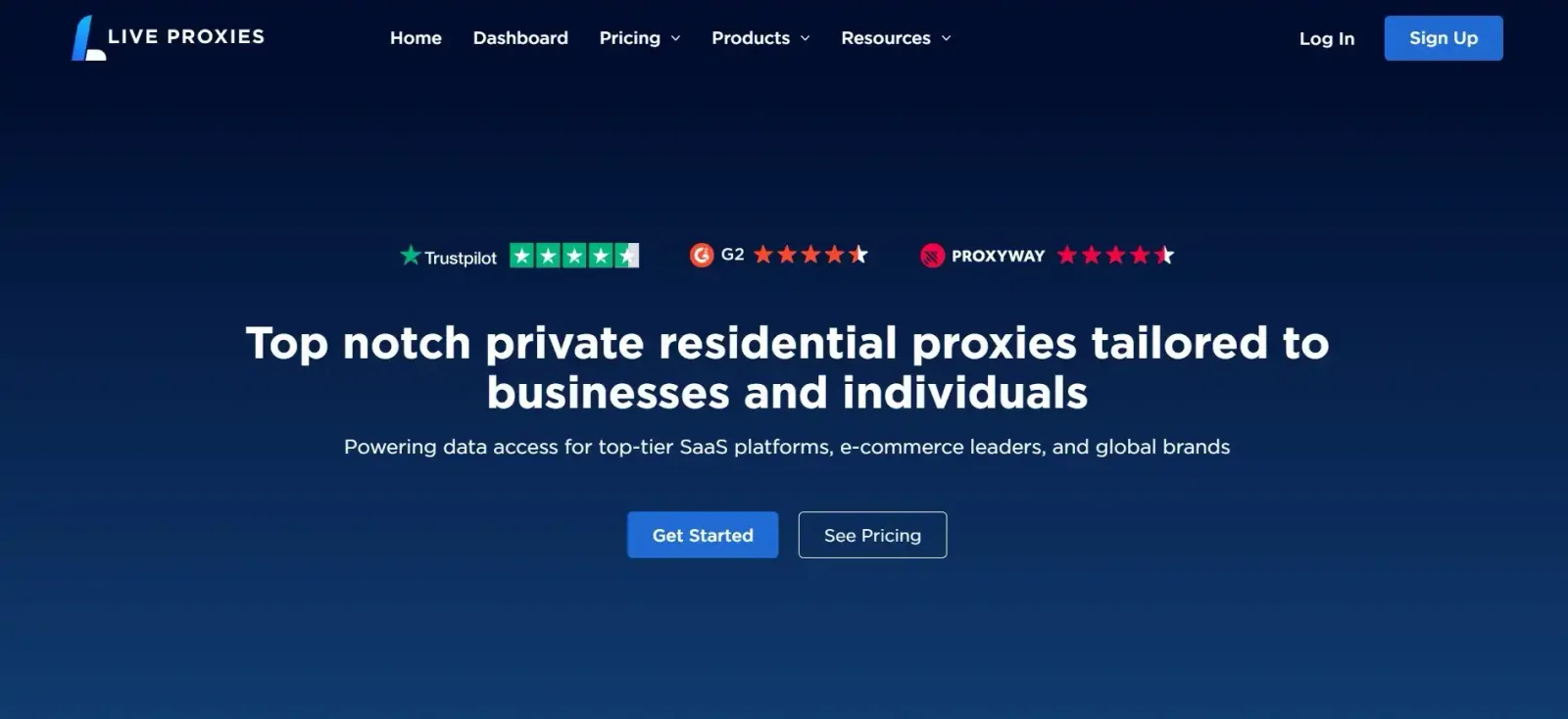
Live Proxies provides rotating residential and rotating mobile proxy infrastructure for B2C and B2B customers, with business plans configured through custom consultation. The provider gives enterprise clients access to b2b proxies built around private IP allocation, rotating and sticky session formats, HTTP and SOCKS5 support, unlimited threads, and 24/7 support. Its network includes 10 million IPs across 55+ countries, with strong coverage in the US, UK, and Canada.
Strengths
- Sticky sessions up to 24 hours
- Country, city, and ASN targeting
- Private IP allocation model
- HTTP and SOCKS5 support
- Enterprise traffic packages available
Limitations
- Smaller product portfolio than providers offering datacenter and ISP products
- Enterprise-focused plans may exceed the needs of a smaller team
Best Enterprise Fit
Live Proxies fits organizations running recurring collection workflows that require stable sessions, traffic separation, and geographically targeted routing. Enterprise deployments can also benefit from unlimited rotating residential proxies on supported plans and custom infrastructure packages.
2. Oxylabs
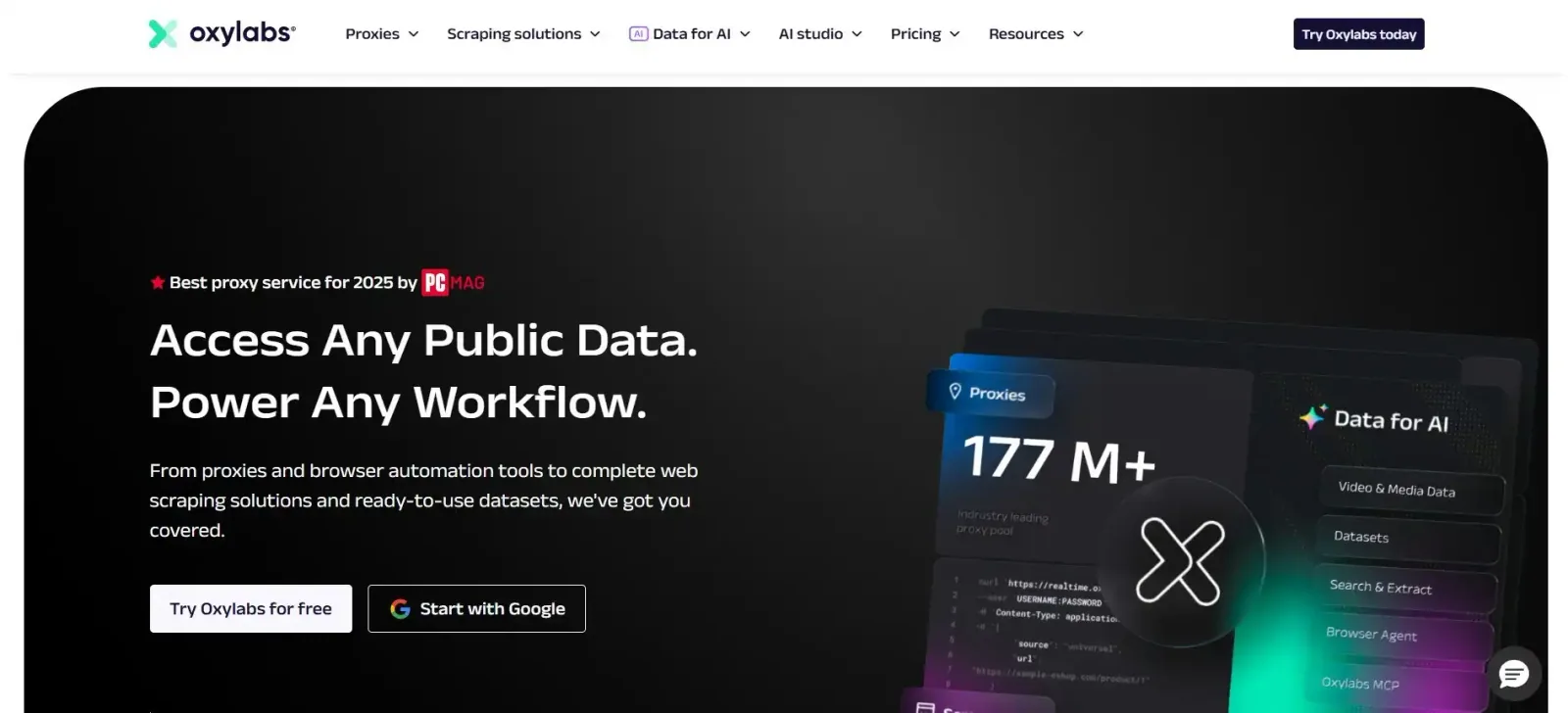
Oxylabs provides proxy infrastructure and public web data collection tools for enterprise scraping, market intelligence, AI data workflows, and analytics teams. Its platform lists 175M+ residential proxy IPs and 2M datacenter IPs, supported by products such as Residential Proxies, Mobile Proxies, ISP Proxies, Datacenter Proxies, Web Scraper API, SERP Scraper API, Web Unblocker, and browser automation tools.
Strengths
- Multiple proxy categories
- Advanced geo-targeting controls
- Scraping and SERP APIs
- Enterprise support structure
- Large-scale automation support
Limitations
- Enterprise-oriented pricing
- More complex product ecosystem
Best Enterprise Fit
Oxylabs fits organizations that require both proxy infrastructure and managed data collection services within the same vendor environment.
3. Decodo
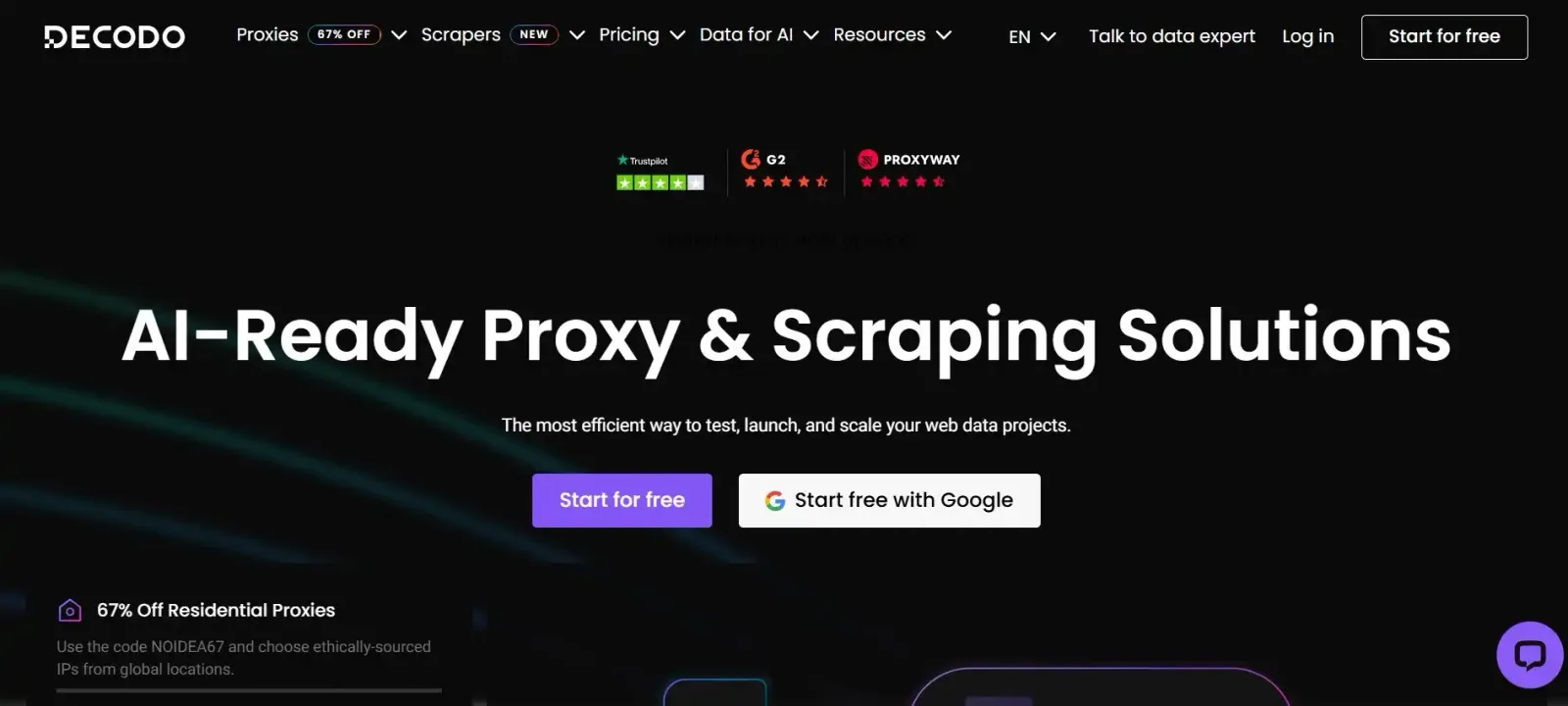
Decodo, formerly Smartproxy, provides proxy infrastructure and scraping tools for automation, SERP collection, web scraping, ad verification, and AI-connected workflows. Its product line includes residential proxies, mobile proxies, static residential proxies, and datacenter proxies, with residential proxy pricing starting from $2/GB and entry plans available from 3 GB. Decodo also promotes country, city, and ZIP code targeting for residential proxy workflows.
Strengths
- Multiple proxy types
- Broad targeting options
- Automation-friendly APIs
- Flexible session management
- Scraping infrastructure available
Limitations
- Advanced configurations may require technical expertise
- Some enterprise features depend on larger plans
Best Enterprise Fit
Decodo works well for organizations balancing large-scale automation requirements with flexible deployment options.
4. SOAX
SOAX provides residential, mobile, US datacenter proxies, and Web Data API access for teams running geo-sensitive data collection and monitoring workflows. Its residential proxy product lists 155M+ IPs across 195 countries, with HTTP(S), SOCKS5, UDP, and QUIC support. SOAX also promotes unlimited concurrent sessions and ethically sourced proxies.
Strengths
- Residential and mobile proxy support
- Flexible rotation controls
- ISP-level targeting options
- Strong geographic coverage
- Enterprise support options
Limitations
- Higher entry pricing
- Smaller product range than some competitors
Best Enterprise Fit
SOAX fits organizations where location accuracy plays a central role in data collection and monitoring operations.
5. Rayobyte
Rayobyte provides residential, ISP, datacenter, and mobile proxy products for scraping, automation, and multi-environment data collection. Its residential proxy pricing starts as low as $0.50/GB, while its static datacenter proxy plans start from $1/IP and static ISP proxies start from $4.60/IP. Rayobyte also offers rotating ISP and rotating datacenter options, plus scraping infrastructure for teams that need proxy access and managed collection tools.
Strengths
- Broad proxy portfolio
- Scraping API availability
- ISP proxy options
- Automation support tools
- Flexible deployment models
Limitations
- Product selection may be overwhelming for smaller teams
- Some advanced features require additional services
Best Enterprise Fit
Rayobyte fits organizations operating multiple collection environments with different infrastructure requirements.
6. IPRoyal

IPRoyal provides residential, ISP, mobile, and datacenter proxies for businesses that need flexible proxy access without a heavy enterprise procurement process. Its residential proxy product lists 32M+ IPs across 195+ countries, with pricing starting at $7/GB for 1 GB plans and lower per-GB rates at higher volumes. The dashboard supports location targeting, session behavior controls, authentication settings, and residential proxy configuration.
Strengths
- Multiple proxy categories
- Flexible purchasing options
- Sticky session support
- Geographic targeting
- Lower entry costs
Limitations
- Fewer enterprise platform services
- Smaller ecosystem than larger providers
Best Enterprise Fit
IPRoyal fits growing organizations building proxy infrastructure for monitoring, automation, and market intelligence projects.
7. Webshare
Webshare provides self-service proxy infrastructure for teams that need fast setup, API access, and predictable pricing. Its platform offers residential, datacenter, and static residential proxy products, with rotating residential proxies listed at 80M+ residential IPs and pricing starting from $1.40/GB. Webshare also offers 10 free proxies without requiring a credit card, which makes it useful for testing and smaller deployment workflows.
Strengths
- Low entry pricing
- Residential and datacenter options
- API access
- Simple deployment process
- Free plan availability
Limitations
- Limited enterprise tooling
- Less specialized enterprise support
Best Enterprise Fit
Webshare fits organizations running moderate-scale data collection and testing environments.
8. ProxyEmpire
ProxyEmpire provides rotating residential, static residential, rotating mobile, dedicated mobile, and datacenter proxy products for regional monitoring and automation workflows. Its homepage lists over 30M ethically sourced rotating residential proxies across 170+ countries, with country, region, city, ISP, and mobile carrier targeting. Rotating residential pricing starts from $7/GB, with promotional pricing often shown from $3.50/GB and custom plans available for 5 TB+ usage.
Strengths
- Multiple proxy categories
- Sticky and rotating sessions
- Location-based targeting
- Flexible purchasing models
- Proxy testing tools
Limitations
- Smaller ecosystem than major enterprise vendors
- Some advanced enterprise requirements may require custom arrangements
Best Enterprise Fit
ProxyEmpire fits organizations that need regional monitoring, localized data collection, and flexible deployment options.
How to Choose an Enterprise Proxy Provider?
The best provider depends on workload requirements, traffic patterns, and operational priorities rather than IP volume alone. Enterprise teams should evaluate how the infrastructure will support both current projects and future scaling requirements.
1. Define the Primary Workload
Different workflows create different infrastructure requirements. AI training, SEO monitoring, ad verification, and market intelligence often require different proxy strategies. Identifying the primary workload helps narrow the list of suitable providers and prevents organizations from paying for capabilities they may never use.
2. Determine Geographic Requirements
Organizations should identify whether country-level targeting is sufficient or whether city, regional, ASN, or carrier targeting is necessary. More granular targeting often becomes important when collecting localized search results, pricing data, or regional marketplace information.
3. Evaluate Session Requirements
Some environments require frequent rotation, while others depend on long-duration sticky sessions to maintain continuity. Session behavior can affect automation stability, account-based workflows, and recurring collection tasks that need predictable routing across projects.
4. Compare Automation Features
API support, authentication options, reporting, and integration capabilities can significantly affect deployment efficiency. Strong automation features make it easier to connect proxy access with data pipelines, monitoring systems, internal tools, and scheduled workflows across teams.
5. Review Pricing at Scale
Enterprise traffic volumes often change the economics of a proxy provider. Procurement teams should evaluate long-term costs, volume discounts, custom contracts, and unmetered options as usage grows across markets, internal teams, projects, and recurring collection workflows.
6. Consider Compliance Requirements
Vendor sourcing practices, contractual flexibility, support quality, and procurement readiness should be evaluated alongside technical features. Organizations operating in regulated industries may also require additional documentation related to privacy, security, and data sourcing standards.
Which Teams Benefit Most From Enterprise Proxies?
Enterprise proxies are most useful for teams that collect, monitor, or validate public web data repeatedly across different markets, platforms, and workflows. They help keep access more stable when operations depend on scale, location accuracy, and session control.
- AI and LLM data collection: AI teams collect training data, refresh retrieval pipelines, and monitor public data sources across multiple regions and categories.
- Market intelligence teams: Market intelligence programs rely on continuous collection of pricing, competitor, marketplace, and trend data.
- SEO and search monitoring: SEO teams use proxy infrastructure to collect rankings, monitor SERPs, and validate localized search visibility.
- E-commerce intelligence: Retail and marketplace teams monitor pricing, inventory availability, seller activity, and competitor movements.
- Brand protection: Brand protection programs monitor counterfeit products, unauthorized sellers, and trademark violations across digital channels.
- Ad verification: Advertising teams validate campaign placement, regional delivery, and ad visibility across multiple markets.
- Compliance monitoring: Compliance teams track public data sources, regulatory signals, policy changes, and external risk indicators across relevant markets.
When Do Unlimited Rotating Residential Proxies Make Sense?
Certain enterprise environments require continuous routing across large datasets and recurring monitoring workflows. Unlimited rotating residential proxies are most useful when traffic volume is difficult to predict, workflows run for long periods, and data collection depends on residential IP reputation.
Long-Term Data Collection
Continuous monitoring projects benefit from infrastructure that can maintain stable collection over extended periods. Rotating residential proxies help distribute requests across different IPs, which reduces pressure on a single route during recurring scraping, monitoring, or validation tasks.
AI Training Pipelines
Large-scale dataset acquisition often requires broad routing diversity and flexible traffic distribution. AI teams may need to collect public web data across search results, marketplaces, forums, reviews, product pages, and regional sources without concentrating traffic through one access point.
Continuous Market Monitoring
Organizations tracking competitors, pricing, and availability data may operate collection systems around the clock. Unlimited rotating residential proxies can support these workflows when data changes frequently, and teams need repeated access to the same categories, sources, or markets.
Global SEO Operations
International SEO programs often monitor rankings and search visibility across many regions simultaneously. Residential routing helps teams collect localized SERPs, validate regional search results, and compare visibility across countries or cities with fewer access interruptions.
Which Proxy Deployment Mistakes Should Enterprises Avoid?
Enterprise proxy deployments are often limited by implementation decisions rather than provider quality. Even strong proxy infrastructure can underperform when teams use the wrong routing logic, session settings, or governance model for the workflow.
- Selecting providers based only on price: Low entry costs can become expensive if the setup creates failed requests, weak targeting, or unstable data collection.
- Using one proxy type for every workload: Residential, mobile, ISP, and datacenter proxies support different levels of trust, speed, stability, and cost efficiency.
- Ignoring geographic requirements: Broad location settings can distort localized search results, marketplace pricing, ad visibility, and regional product data.
- Overlooking session management: Incorrect rotation or sticky session settings can interrupt multi-step workflows, account-based monitoring, and automation tasks.
- Mixing business units on shared infrastructure: Shared routes can make usage harder to control, reduce visibility, and create overlap between unrelated workflows.
- Failing to monitor performance: Teams need usage, success rate, latency, and error data to detect routing issues before they affect reporting.
- Underestimating procurement requirements: Enterprise approval often requires security reviews, sourcing documentation, contract terms, support expectations, and billing flexibility.
Conclusion
Enterprise proxy requirements vary significantly depending on the scale of data collection, the number of teams involved, and the level of geographic precision required. A provider that works well for SEO monitoring may not be the right fit for AI data collection, large-scale market intelligence, or compliance monitoring.
Organizations should evaluate providers based on session management, targeting flexibility, automation capabilities, procurement readiness, and long-term scalability rather than IP volume alone. As proxy infrastructure becomes more closely integrated with analytics, AI, and automation systems, the most suitable provider is usually the one that aligns with the organization's operational workflows, deployment model, and growth plans.