Best AI agent tools for sales in 2026
Closing deals faster while spending less time on repetitive tasks sounds like a pipe dream. Yet autonomous AI agents now handle prospecting, outreach personalization, lead qualification, and even live sales conversations without human intervention. The real challenge? Picking the right platform among dozens of contenders, each promising to transform your pipeline.
Pricing models vary wildly, from credit-based systems to flat monthly fees exceeding a thousand dollars. Some tools excel at multichannel outreach automation, others shine in data enrichment or real-time call handling. Your team size, tech stack, and go-to-market strategy all shape which solution actually delivers ROI.
This guide breaks down seven standout platforms, comparing their core capabilities, pricing structures, and ideal use cases. Every recommendation draws from documented features, verified customer data, and publicly available performance benchmarks.
Overloop
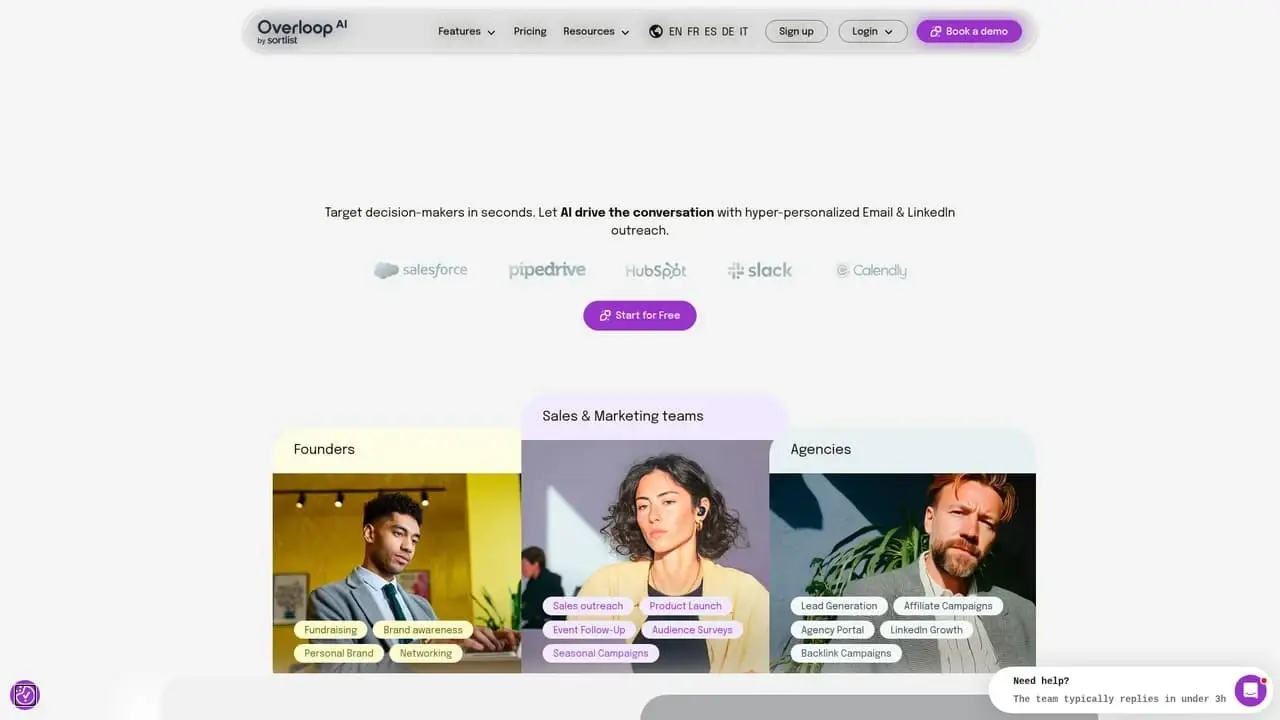
Overloop runs as a fully AI-powered sales automation platform built on a decade of outbound expertise. With access to 450M+ verified contacts, it handles everything from prospect sourcing to meeting booking without manual input.
Three pricing tiers cover every team size imaginable. The Starter plan costs $69/user/month and includes 250 credits, while Growth jumps to $99/user/month with 500 credits. Enterprise teams get custom pricing, 1,000 credits per user, a dedicated account manager, and personalized onboarding.
What sets Overloop apart is its multichannel workflow engine. AI agents draft hyper-personalized emails by analyzing web profiles and social media activity, then orchestrate coordinated sequences across email and LinkedIn simultaneously. The platform's deliverability algorithm, refined across 100,000 campaigns, keeps messages out of spam folders.
Setup takes under five minutes from signup to first campaign launch. The 14-day free trial requires no credit card, so teams can validate the platform against their specific outreach goals before committing. SDRs using Overloop reportedly reclaim up to 90% of their time previously spent on manual prospecting and follow-ups.
Real-time performance analytics let managers track campaign effectiveness instantly. Rather than vanity metrics, the dashboard surfaces actionable insights about reply rates, booking conversions, and sequence optimization opportunities.
SalesCloser
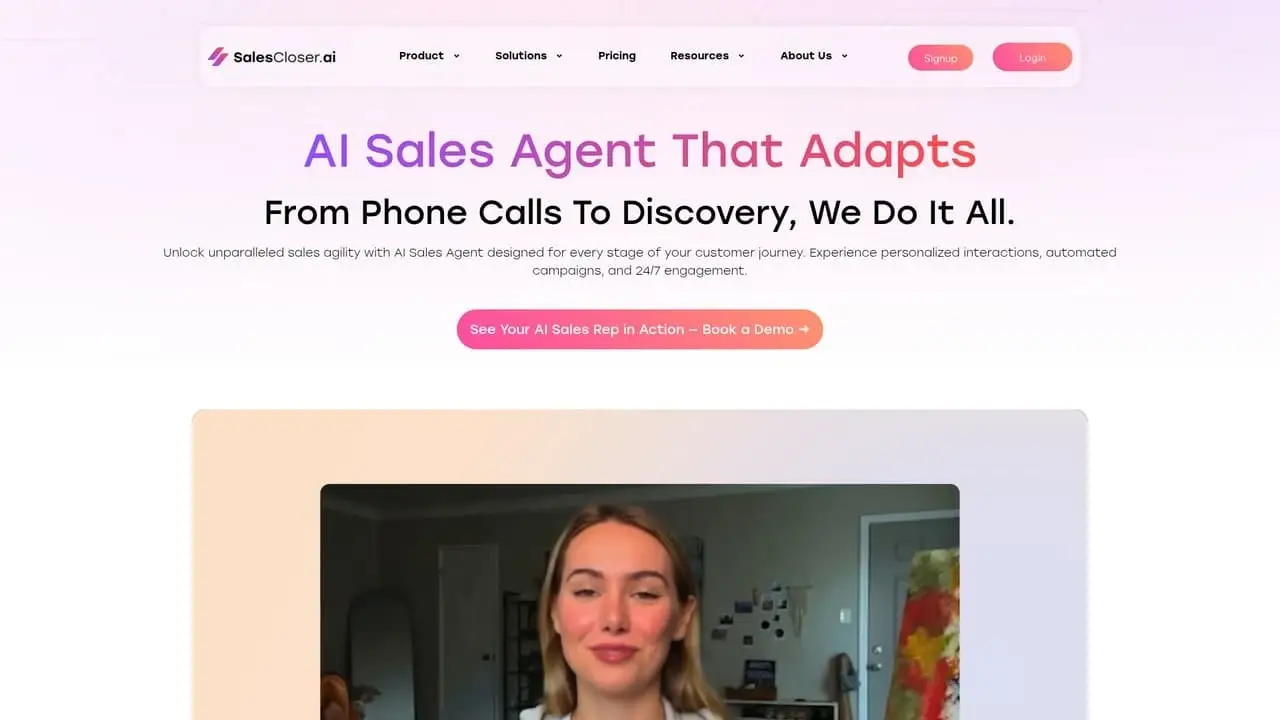
SalesCloser takes a radically different approach. Instead of automating email sequences, it deploys AI agents capable of handling real-time sales conversations via phone, Zoom, and browser-based calls.
Starting at $1,000 per month, the platform targets companies ready to replace or augment their SDR teams at scale. It integrates with 200+ existing platforms, so teams avoid rebuilding their tech stack from scratch.
The AI adapts to your brand voice and product knowledge through a configurable knowledge base. Need to demo your SaaS product live? The agent handles personalized product demonstrations while qualifying leads and routing them to human closers. Support runs 24/7 across 32 languages with native-level fluency.
- Deploy a customized agent in days, not months
- Avoid LinkedIn and Gmail throttling risks entirely
- Scale inbound and outbound calls without hiring
- Maintain SOC 2 Type I compliance with GDPR alignment underway
Because SalesCloser operates through direct voice channels rather than heavily regulated email and social platforms, it sidesteps the deliverability headaches and account suspension risks that plague traditional outreach tools. Teams managing high-volume call operations find this independence particularly valuable.
Gumloop
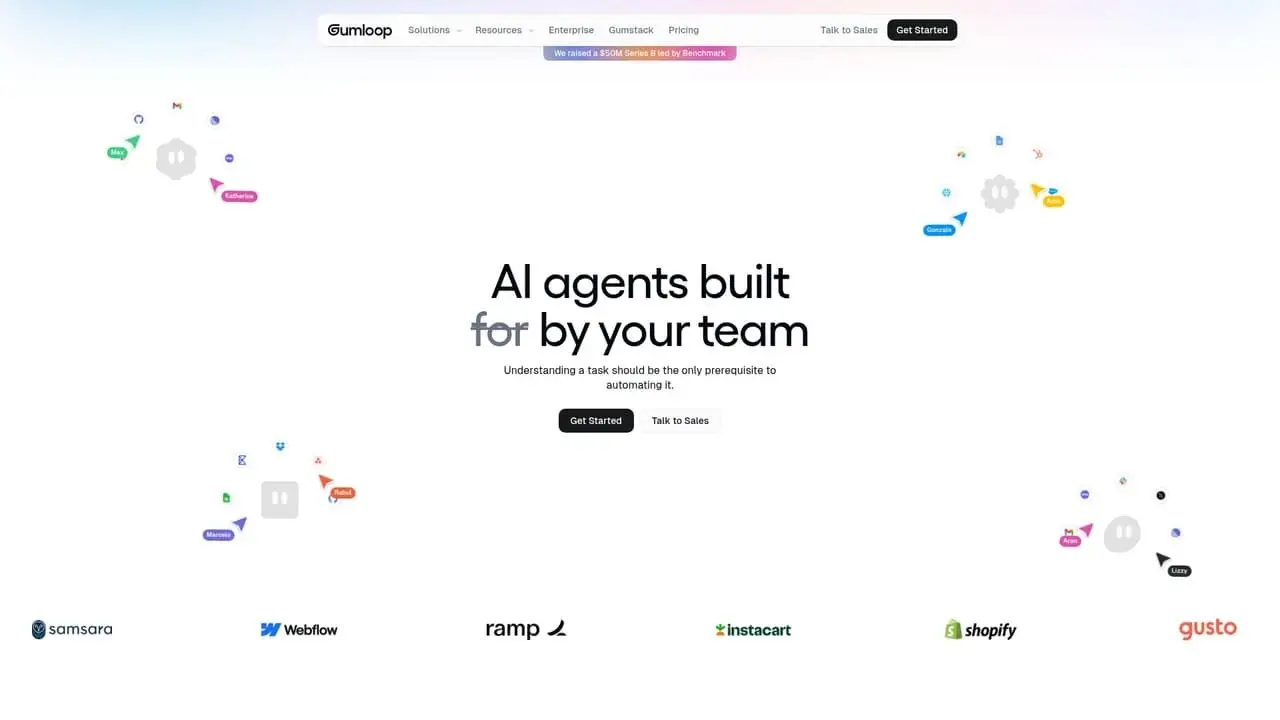
Gumloop functions as a no-code platform for building, deploying, and managing specialized AI agents in minutes. Think of it as assembling a team of digital workers, each trained for a specific sales function.
The agent roster covers the entire sales cycle. A CRM Agent manages deals and prospect data. A Meeting Prep Agent researches attendees before calls. A Call Analysis Agent reviews recordings for coaching insights. A Lead Qualifier processes form submissions and scores them automatically.
Where Gumloop truly differentiates itself is collaboration. Teams interact with agents like colleagues through Slack, Teams, and email integrations. You assign tasks, review outputs, and refine agent behavior without writing a single line of code. The platform supports models from Anthropic, OpenAI, Gemini, and DeepSeek, giving you flexibility to match the right model to each task.
Security credentials run deep: SOC 2 Type II and GDPR certifications, role-based access controls, SSO via Okta, audit logging, and zero data retention for AI training. Enterprise clients can deploy in a virtual private cloud for maximum data isolation.
Gusto, a notable customer, uses Gumloop to generate revenue, reduce churn, and boost rep performance across their sales organization.
Relevance AI
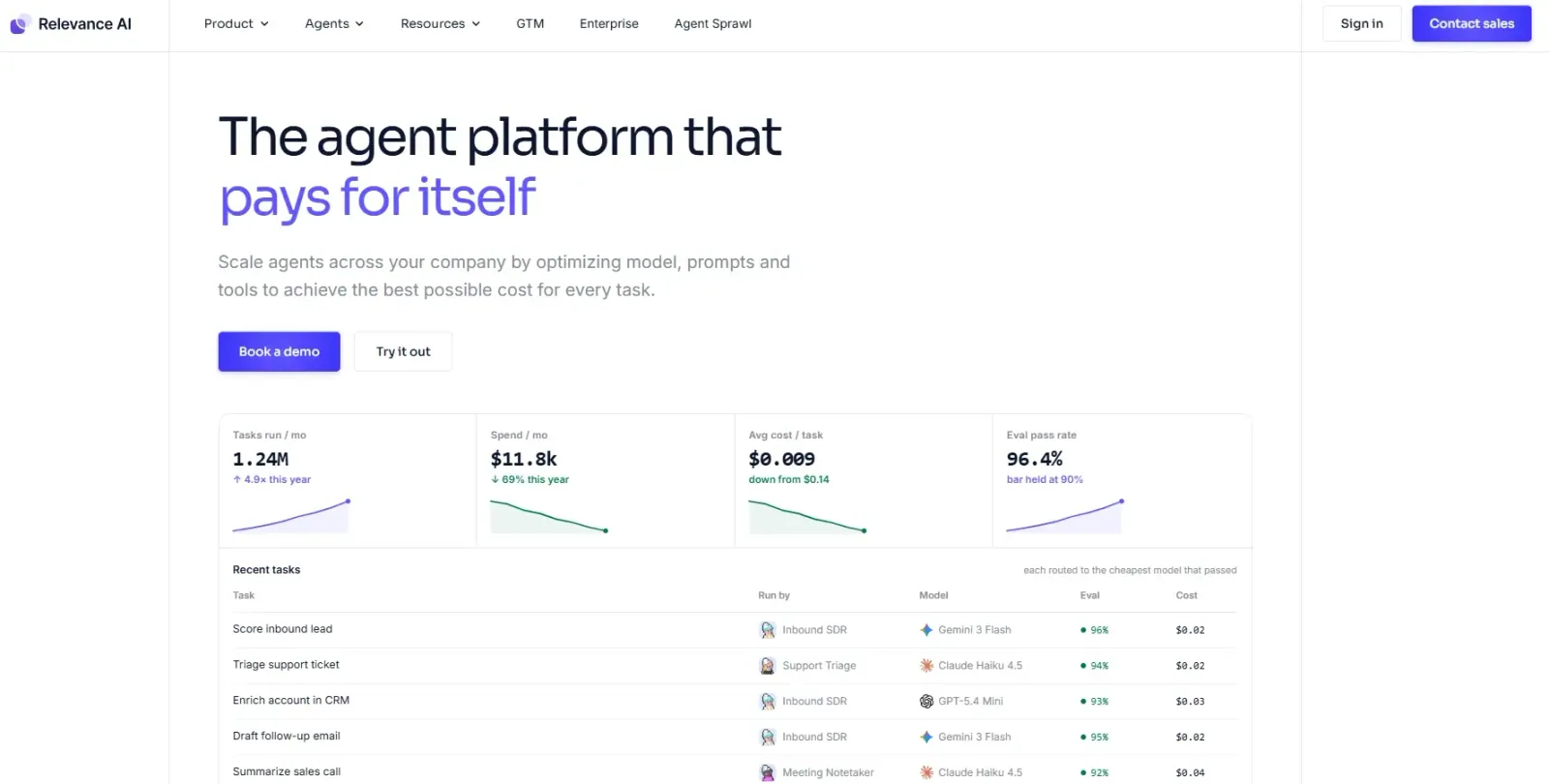
Relevance AI optimizes the cost of running sales AI agents by automatically selecting the cheapest model that still meets your quality thresholds. This approach slashes agent operating costs without sacrificing output quality, a rare engineering focus in this space.
The platform connects natively with HubSpot, LinkedIn, and Apollo to power a complete inbound-to-outbound pipeline. Agents research leads, enrich contact data, score prospects against your ICP criteria, draft personalized outreach sequences, and qualify responses autonomously.
Three documented customer results tell a compelling story. Qualified built $7 million in pipeline using 35+ agents. Send Payments saves 40 hours weekly on manual processes. Zembl achieved a 30% lift in customer conversions.
What keeps teams in control? Configurable manual approvals at any step, detailed audit logs, role-based access, and automatic PII masking protect both compliance and quality. Multi-region deployment options let global teams respect data residency requirements while operating from a single dashboard.
Rather than guessing which AI model performs best, Relevance AI runs real evaluations and benchmarks. It then routes each task to the most cost-effective option, specializing agents to reduce scope and spending simultaneously.
Instantly
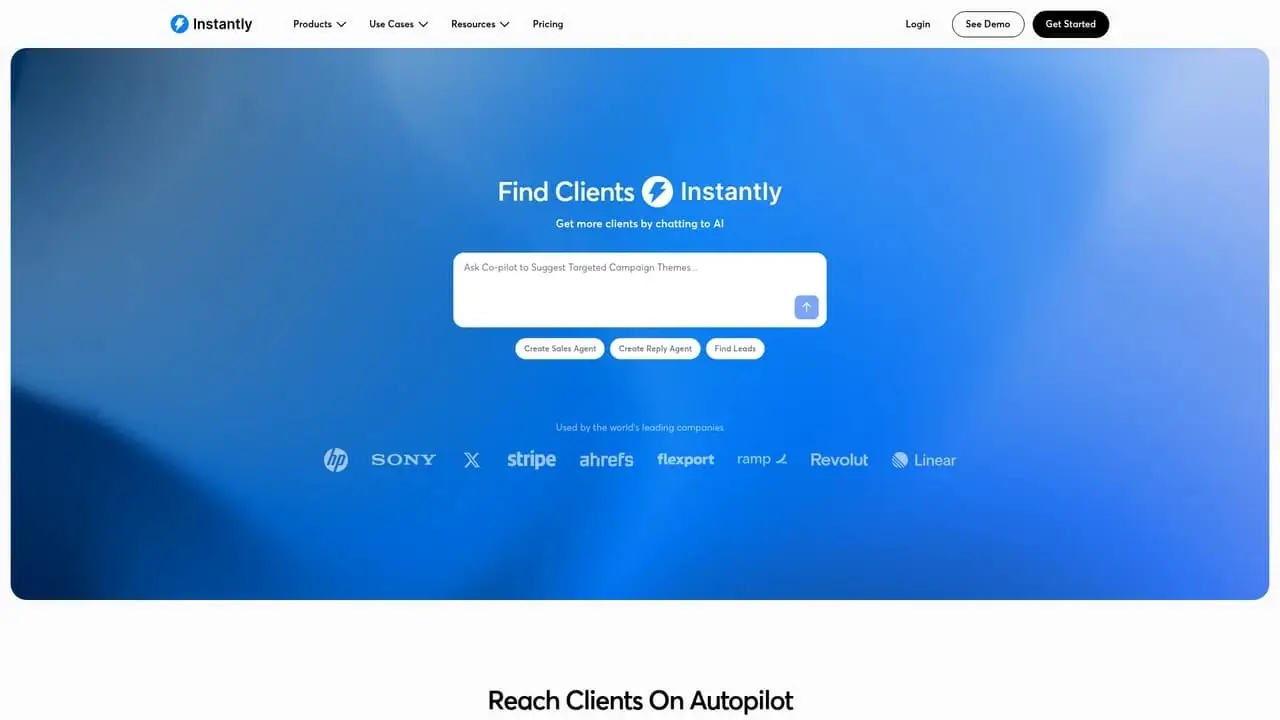
Instantly powers outreach for 50,000+ sales teams and carries an aggregate rating of 4.8 out of 5 across 3,838 reviews. Free access gets you started without a credit card.
The platform bundles AI sales agents, automated workflows, and a built-in B2B lead database into one interface. Campaigns launch in minutes with AI-generated personalization at scale. Routing, tagging, and triggered sequences run automatically, while underperforming campaigns pause themselves before wasting budget.
What makes Instantly unusual is its obsession with revenue-focused metrics. Dashboards track opportunities, pipeline value, conversions, and actual revenue rather than open rates or click-throughs. This shift helps teams optimize for outcomes that matter instead of chasing vanity numbers.
Client testimonials reference 100,000+ emails sent with response rates exceeding 20%. The AI co-pilot sources qualified leads from the built-in database and feeds them directly into automated sequences.
GDPR compliance stands on solid ground with a complete Data Processing Addendum, Standard Contractual Clauses for EEA and UK transfers, and SOC 2 Type 2 audits. Mandatory breach notification protocols and documented security measures round out the compliance framework.
Apollo.io
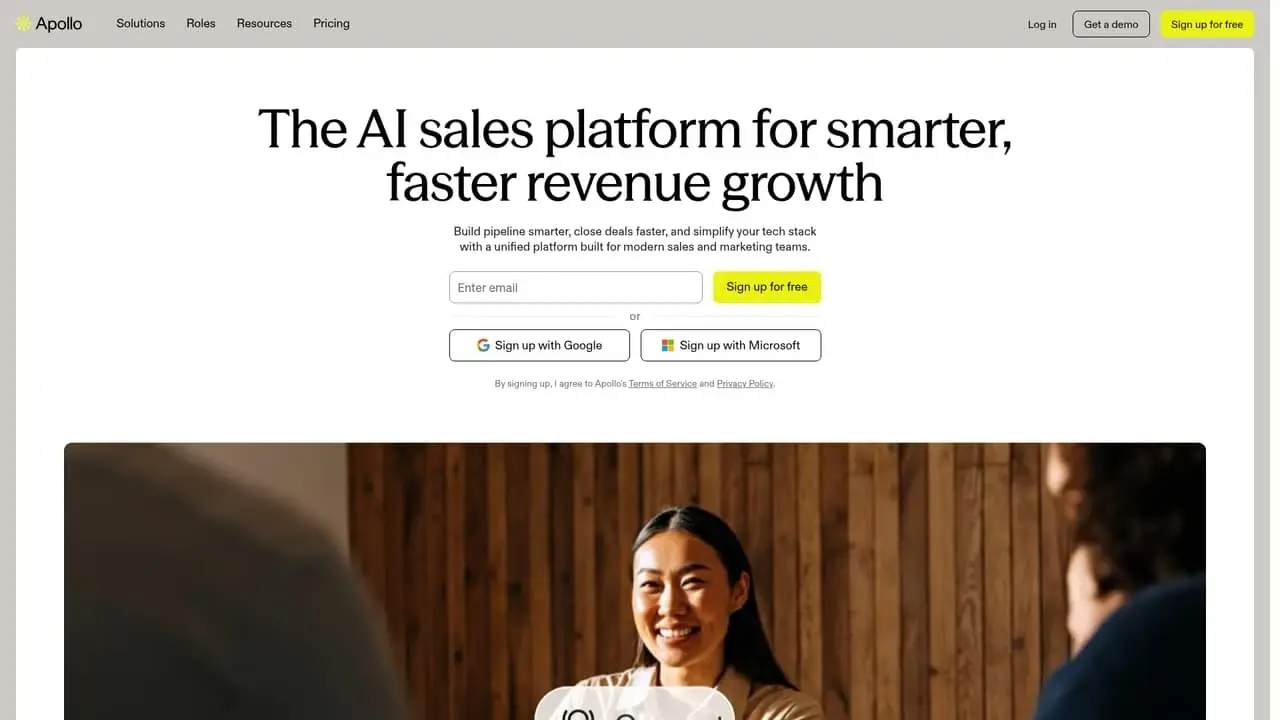
Apollo.io replaces five standalone tools with a single platform covering prospecting, data enrichment, sequencing, calling, and CRM. Founded in 2015 by Tim Zheng, it now serves over 600,000 companies worldwide.
The contact database holds 230 million contacts and 30 million companies with verified email addresses and phone numbers. Data syncs across your CRM in real time, keeping records accurate without manual updates. Teams report a 70% increase in sales prospects and 4x SDR efficiency after adoption.
A free plan lets you explore core features before upgrading. Paid plans offer live onboarding sessions, Apollo Academy courses, and 24/7 AI chat support. The company claims customers save thousands annually by consolidating tools, with a documented 64% reduction in tech costs.
AI capabilities extend beyond outreach. The platform prepares reps for calls with AI-generated briefings, summarizes conversations post-call, scores leads, identifies anonymous website visitors, and coaches sellers based on conversation intelligence. Multichannel sequences coordinate email, phone, and LinkedIn touchpoints automatically.
Security certifications include ISO 27001, SOC-2, CCPA, CASA Tier 2, PCI DSS, and EU-US Data Privacy Framework compliance. Encryption protects data both in transit and at rest, while annual penetration tests and quarterly audits validate the infrastructure. A 4.7/5 average rating from over 9,000 reviews reflects consistent user satisfaction.
Clay
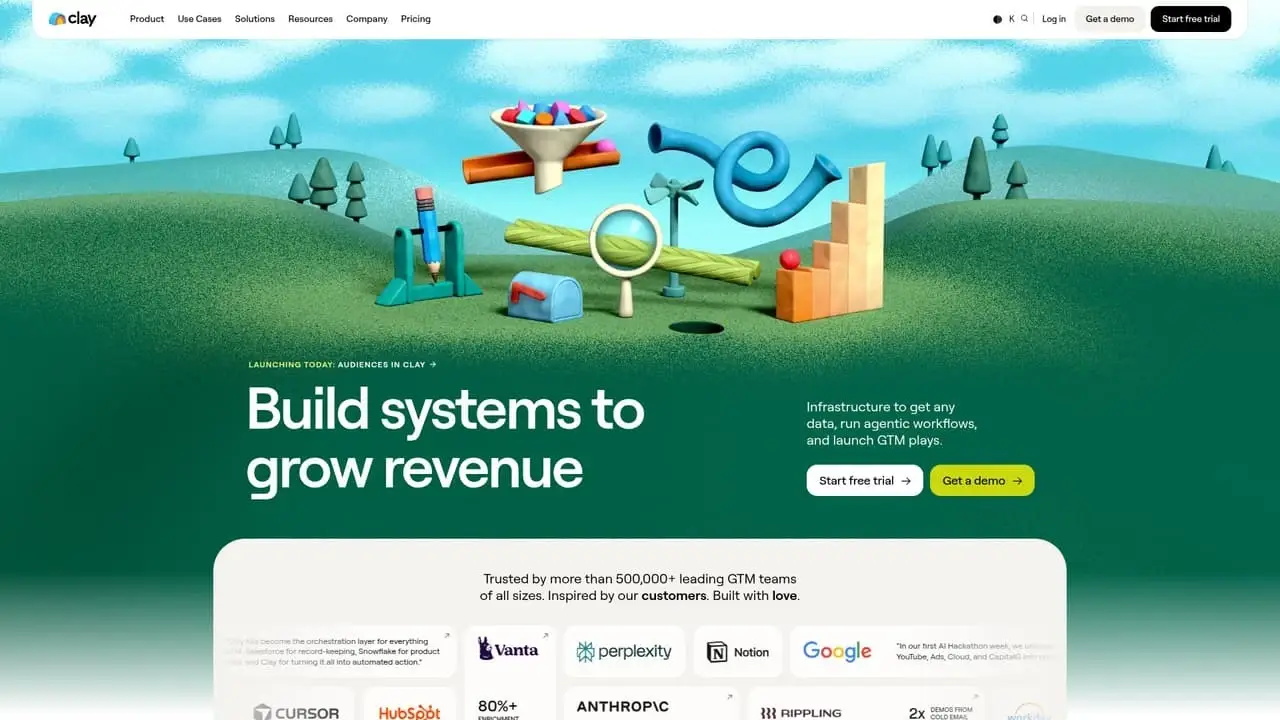
Clay aggregates 150+ premium data sources into one workspace, then layers AI agents on top to automate research, enrichment, and outreach. The result? Enrichment success rates 3x higher than single-provider approaches, as demonstrated by Anthropic's own team.
Pricing scales through a credit-based model. The free tier includes 100 Data Credits and 500 actions monthly. Launch starts at $185/month with 2,500 credits. Growth costs $495/month with 6,000 credits. Enterprise plans require annual commitments and unlock 100,000+ credits with dedicated strategy support.
Claygent, the platform's AI research agent, autonomously investigates accounts, qualifies prospects, and prepares call briefs. Sculptor lets you build custom workflows visually, connecting triggers like job changes, web intent signals, or form submissions to automated enrichment and outreach sequences.
What distinguishes Clay from pure outreach tools is its data infrastructure layer. Native integrations with Snowflake, Databricks, BigQuery, and Postgres let revenue operations teams sync enriched data bidirectionally with their existing warehouses. Ad audiences push directly to LinkedIn, Meta, and Google Ads for coordinated campaigns.
Growth and Enterprise plans include CRM auto-sync, waterfall enrichment across multiple providers, and real-time signal tracking. Security certifications cover SOC 2 Type II, GDPR, CCPA, ISO 27001, and ISO 42001.
FAQ
How do AI sales agents differ from traditional automation tools?
Traditional automation tools follow rigid, rule-based sequences you configure manually. AI sales agents make autonomous decisions: they research prospects, personalize messages based on real-time data, and adapt their approach depending on responses.
The biggest gap lies in cognitive capabilities. AI agents qualify leads, draft unique copy, and even handle live conversations without human scripting at every step.
What budget should a team expect for AI sales tools?
Entry-level plans start around $69 per user monthly, while enterprise-grade platforms can exceed $1,000 per month. Most vendors offer free trials or freemium tiers so you can test before committing.
Factor in hidden costs like credits for data enrichment, additional seats, and premium integrations. Calculate your total cost per lead rather than just the subscription price to gauge real value.
Which features matter most when choosing an AI sales agent?
Prioritize data quality and enrichment capabilities, since every downstream action depends on accurate prospect information. Next, evaluate multichannel support (email, LinkedIn, phone) and native CRM integrations with your existing stack.
Don't overlook compliance certifications like SOC 2 and GDPR, especially for teams selling into regulated industries. Analytics depth also matters: look for revenue-focused dashboards rather than vanity metric trackers.
Can AI sales tools replace human sales reps entirely?
Most platforms augment reps rather than fully replace them. AI agents handle repetitive tasks like prospecting, data entry, and initial qualification, freeing humans for relationship building and complex negotiations.
Some tools like voice-based agents can conduct full sales conversations independently. But closing high-value enterprise deals still demands human judgment, empathy, and creative problem-solving that AI cannot replicate reliably.
How long does it typically take to deploy an AI sales agent?
Lightweight platforms offer setup under five minutes with pre-built templates and guided onboarding. More complex enterprise deployments involving custom integrations, knowledge base configuration, and team training typically take a few days to two weeks.
The biggest variable is data preparation. Clean CRM records and well-defined ICP criteria accelerate deployment dramatically. Teams with messy data spend more time on initial configuration than on the tool itself.