Why Nobody Understands Your Product And How 90-Second Explainer Videos Fix What Your Website Cannot

You have spent months building a product that solves a real problem, but every time you describe it to someone, their eyes glaze over.
This is not a reflection of your product's value it is a communication failure that affects the vast majority of businesses, from scrappy startups to established enterprises.
The uncomfortable truth is that most companies are terrible at explaining what they do. Their websites are cluttered with jargon, their feature pages read like technical documentation, and their marketing materials assume a level of familiarity that new visitors simply do not have.
The Comprehension Crisis Nobody Talks About
Research consistently shows that the average website visitor decides whether to stay or leave within the first few seconds of landing on a page. In that tiny window, most businesses fail to communicate even the most basic version of what they offer and why it matters.
This is not because the product is too complicated or the audience is too impatient.
It is because text-heavy landing pages force visitors to do the cognitive heavy lifting of imagining how a product works, picturing themselves using it, and connecting abstract features to real outcomes all at the same time.
The human brain was not designed to process information this way. We are wired for visual storytelling, movement, and narrative, which is exactly why explainer videos have become the most effective tool for bridging the gap between what a company builds and what a customer understands.
Why Text Alone Cannot Do the Job
Written copy will always have a place in marketing, but it has fundamental limitations when it comes to explaining complex products or services.
Words describe things sequentially, one idea after another, which means a reader must hold multiple concepts in their working memory and assemble them into a coherent picture.
Video, on the other hand, delivers information through multiple channels simultaneously: visuals, motion, narration, text overlays, and music all working together to create a single unified experience.
This is why viewers retain approximately 95% of a message when they watch it in a video, compared to just 10% when reading it as text.
For products that involve workflows, multi-step processes, or abstract concepts, the difference is even more dramatic.
A 90-second explainer video can demonstrate what would take a 2,000-word article to describe, and the viewer walks away with a clearer mental model of how the product actually works in practice.
The Old Way of Making Explainer Videos Was Broken
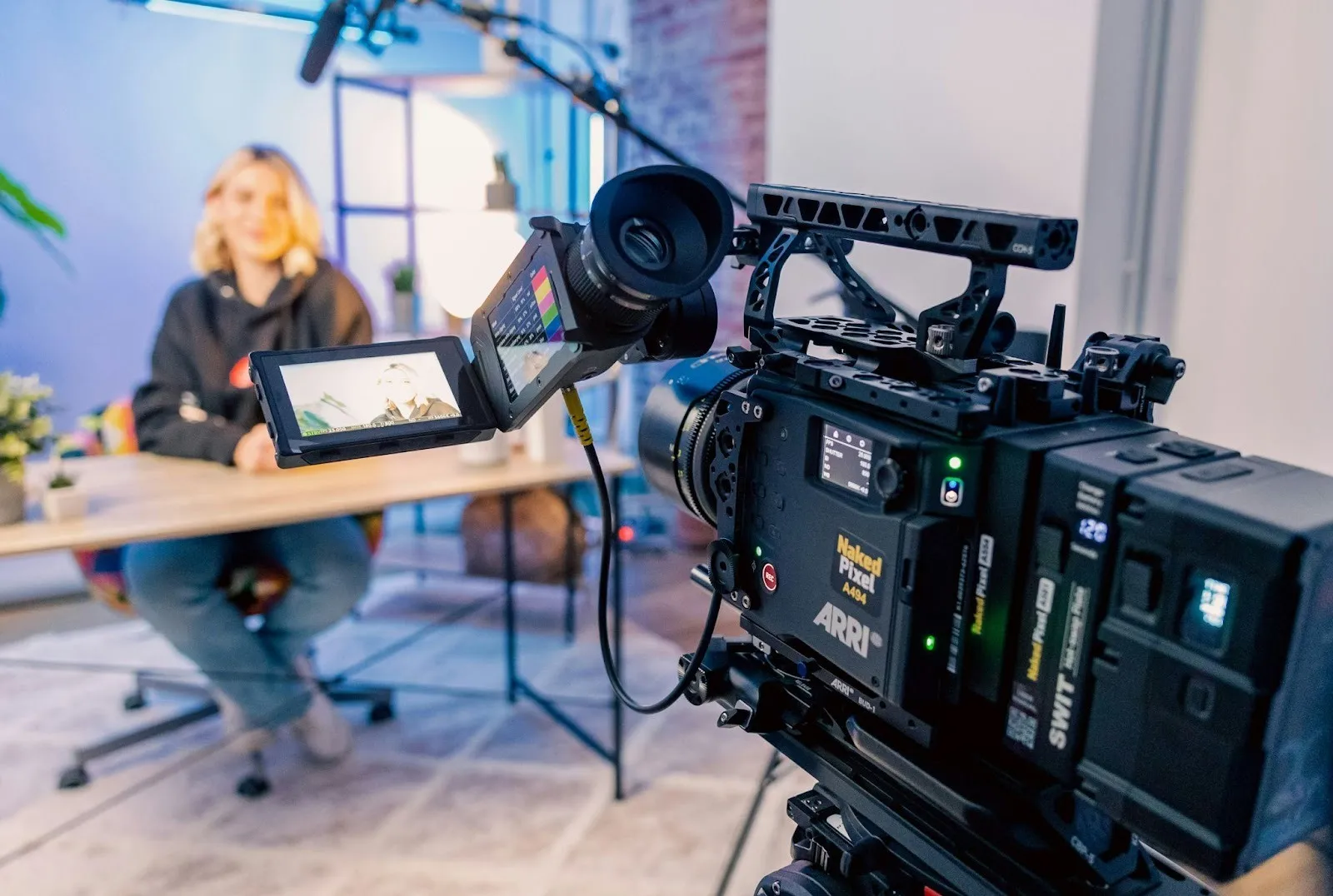
Until recently, creating a professional explainer video was a project that required significant time, money, and coordination.
You needed a scriptwriter who understood your product, a storyboard artist to plan the visuals, motion graphics designers to bring the storyboard to life, a voice actor to record the narration, and an editor to assemble everything into a polished final cut.
The typical timeline for this process was four to eight weeks, with costs ranging from several thousand dollars to well over ten thousand, depending on the complexity and the production studio.
For startups and small businesses, this made professional explainer videos a luxury rather than a standard part of the marketing toolkit.
Even for larger companies with the budget, the production bottleneck meant that explainer videos were created for flagship products only, leaving dozens of features, use cases, and campaigns without the visual storytelling they deserved.
The result was a world where only a handful of well-funded brands could afford to explain themselves properly.
AI Has Fundamentally Changed the Equation
The emergence of AI-powered video creation tools has collapsed both the cost and the timeline of producing high-quality explainer videos.
What once required a team of specialists and weeks of back-and-forth can now be accomplished in minutes by a single person with nothing more than a written prompt or script.
An explainer video maker like Agent Opus, for example, can take a text brief, blog post, or product outline and automatically generate a complete video with AI motion graphics, professional voiceover, dynamic visuals, and background music, all without requiring any manual editing or timeline manipulation.
You describe what you want to explain, and the tool delivers a publish-ready video. This shift is not just about saving money, though the savings are substantial.
It is about removing the friction that prevented most businesses from using explainer videos at all, making visual storytelling accessible to every team, every product, and every campaign.
Five Use Cases Where Explainer Videos Outperform Everything Else
Understanding where explainer videos create the most impact can help you prioritize which ones to create first. These five scenarios represent the highest-leverage opportunities for most businesses.
Product Launches
When you are introducing something new to the market, you have one chance to make a first impression that sticks.
An explainer video lets you control the narrative completely, walking potential customers through the problem, the solution, and the outcome in a format that is infinitely more engaging than a press release or a bullet-pointed feature list.
Customer Onboarding
The gap between signing up for a product and actually understanding how to use it is where most customer churn happens.
A short explainer video that walks new users through the core workflow in 60 to 90 seconds can reduce support tickets, accelerate time-to-value, and dramatically improve retention.
Complex B2B Sales
Enterprise buyers rarely make purchasing decisions alone they need to explain your product to colleagues, managers, and procurement teams who have never visited your website.
An explainer video gives your champion a shareable asset that communicates your value proposition accurately, even when you are not in the room.
Internal Training
Every time your company releases a new corporate video, process, tool, or policy, someone has to explain it to the entire team. Explainer videos scale this communication effortlessly, ensuring that every employee receives the same clear, consistent message regardless of their location or time zone.
Social Media and Paid Advertising
Platforms like TikTok, Instagram Reels, and LinkedIn reward video content with significantly more reach than static posts or text updates.
An explainer video formatted for these platforms can introduce your brand to audiences who would never have clicked through to your website otherwise.
What Makes an Explainer Video Actually Work
Not all explainer videos are created equal, and simply having one does not guarantee results. The videos that drive real comprehension and conversion share a few key characteristics that set them apart from the forgettable ones.
First, they follow a clear narrative structure problem, solution, outcome.
The viewer should immediately recognise the challenge being described, see how the product addresses it, and understand what their life looks like after adopting it.
Second, they respect the viewer's time. The most effective explainer videos are between 60 and 120 seconds long, covering the essential information without padding or repetition. Every second should earn its place in the final cut.
Third, they use visuals to do more than decorate they use visuals to explain. Motion graphics that animate a workflow, illustrate a comparison, or visualise data are doing real communicative work, not just making the video look pretty.
The Compounding Returns of Visual Explanation
One of the most underappreciated benefits of explainer videos is how they compound in value over time.
A single well-made video can be embedded on your website, shared across social platforms, included in email sequences, used in sales presentations, and repurposed for paid advertising, all without creating any additional content.
Each of these placements reaches a different segment of your audience at a different stage of their journey.
The website visitor gets their first introduction, the email subscriber gets a deeper understanding, and the sales prospect gets the final push toward a decision, all from the same core asset.
This reusability makes explainer videos one of the highest-ROI investments a marketing team can make.
The cost of creation is fixed, but the value it generates continues to grow with every new viewer, every share, and every conversion it influences.
The Brands That Explain Best Will Win
We are entering an era where attention is the scarcest resource and clarity is the ultimate competitive advantage.
The companies that can explain what they do quickly, visually, and memorably will consistently outperform those that rely on their audience to figure it out from a wall of text.
The barrier to creating professional explainer videos has never been lower. AI-powered tools have democratised access to motion graphics, voiceover, and visual storytelling that was previously reserved for companies with dedicated video production budgets.
If your product is great but your conversion rates suggest people do not understand it, the problem is almost certainly not what you have built. It is how you are explaining it, and a well-crafted explainer video might be the single most impactful change you can make to fix that.