How AI Video Is Transforming Business Messaging and Customer Engagement in 2026
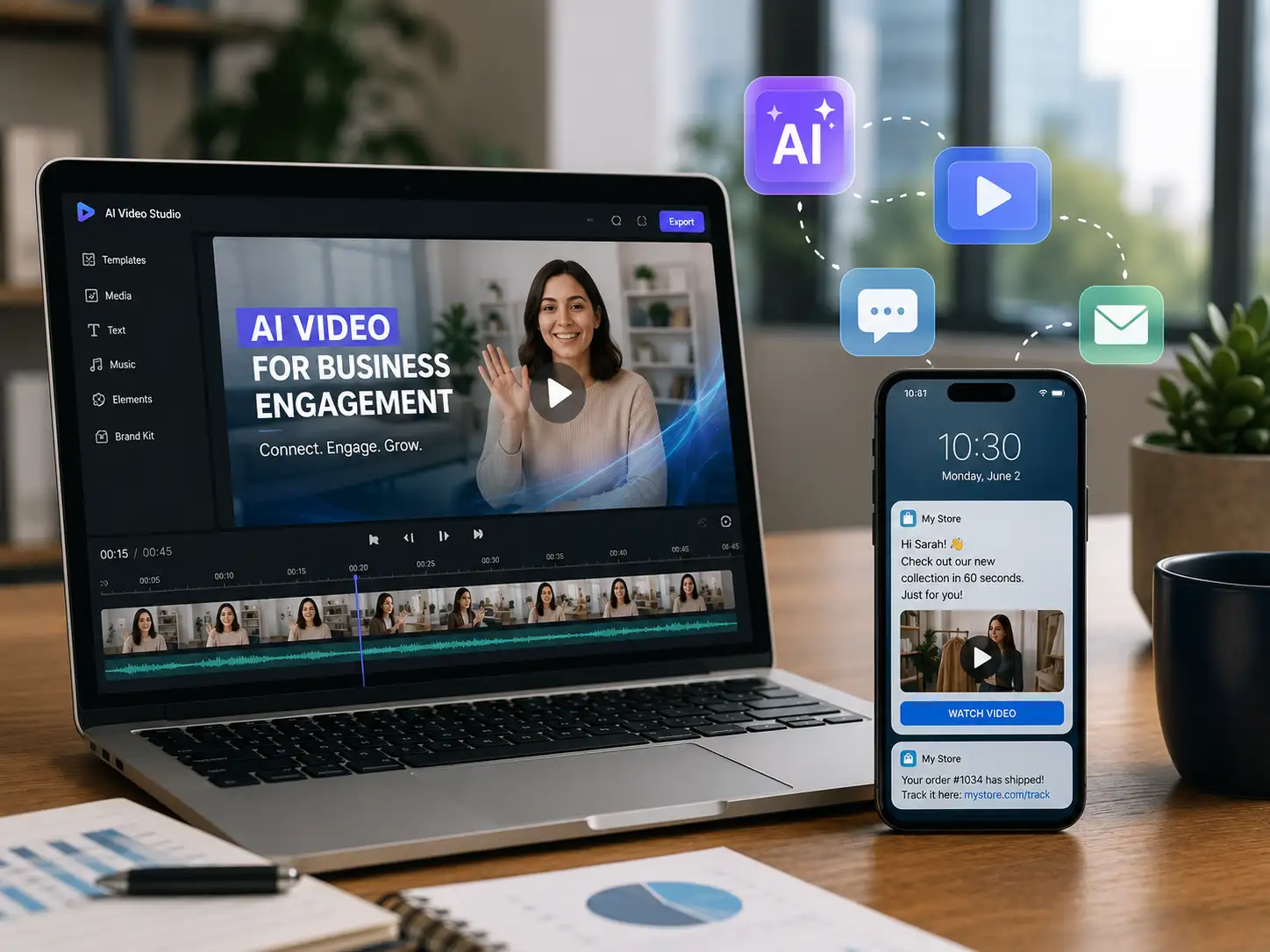
Business communication has changed dramatically over the past few years. Email and SMS remain essential channels, but customers increasingly expect richer, faster, and more engaging interactions. Instead of reading long text messages, they prefer visual content that explains products, demonstrates solutions, or answers questions in seconds.
At the same time, artificial intelligence has made professional video production accessible to businesses of every size. Marketing teams no longer need expensive studios, production crews, or weeks of editing to create high-quality content. AI-powered tools can generate videos within minutes, making video communication practical for daily customer engagement.
This shift is happening across industries. According to Customer.io's 2026 State of Customer Messaging report, 73% of marketers say AI has had a meaningful impact on their messaging strategy, while improving personalization has become the top priority for many organizations. The report also shows that conversion rate has overtaken open rate as the primary success metric, reflecting a growing focus on meaningful customer actions rather than simple message delivery.
Traditional Business Messaging Is No Longer Enough
SMS remains one of the most reliable communication channels because it delivers messages quickly and reaches customers almost instantly. Email continues to play a critical role in nurturing leads and supporting long-form communication. However, today's customers interact with dozens of digital messages every day, making it increasingly difficult for plain text alone to capture attention.
Modern consumers expect businesses to communicate through multiple formats, including images, videos, voice messages, and interactive experiences. Rather than replacing traditional messaging channels, companies are enhancing them with richer media that improves clarity and engagement.
Businesses are increasingly using text to video AI tools to transform product announcements, onboarding instructions, promotional campaigns, and customer support materials into short, engaging videos that can be shared through SMS, email, and messaging platforms. Instead of asking customers to read lengthy explanations, companies can present the same information in a format that is easier to understand and more memorable.
Why AI Video Has Become a Powerful Communication Tool
One of AI video's greatest advantages is speed.
Traditional video production often requires scriptwriting, filming, editing, voice recording, motion graphics, and multiple review cycles. Even a simple promotional video can take several days or weeks to complete.
AI video generation dramatically shortens this process. Marketing teams can convert existing text, blog articles, FAQs, or product descriptions into polished videos within minutes. This allows businesses to respond quickly to product launches, seasonal promotions, software updates, or customer questions without overwhelming creative teams.
AI also makes personalization scalable. Companies can generate multiple versions of the same video for different customer groups, languages, geographic regions, or product categories. Rather than producing dozens of separate videos manually, marketers can automate much of the process while maintaining consistent branding.
Lower production costs make AI video especially valuable for small and medium-sized businesses that previously lacked the budget for frequent video campaigns.
Practical Applications Across the Customer Journey
AI-generated video supports nearly every stage of customer communication.
Marketing campaigns benefit from short promotional videos announcing new products, limited-time discounts, or upcoming events. Video captures attention more effectively than text while helping customers understand offers quickly.
Customer onboarding becomes much smoother when new users receive visual tutorials instead of lengthy instruction manuals. A one-minute walkthrough can often replace several pages of documentation.
Customer support is another area seeing significant improvements. Frequently asked questions, troubleshooting guides, installation instructions, and software demonstrations can all be delivered through concise AI-generated videos. Customers often find visual explanations easier to follow, reducing support tickets and improving satisfaction.
Businesses are also using AI video internally for employee onboarding, HR announcements, sales enablement, compliance training, and knowledge sharing, reducing the time required to produce educational materials.
Combining SMS, Voice, and AI Video for Better Customer Experiences
The future of business communication is not about choosing one channel over another. Instead, successful organizations are building coordinated omnichannel experiences.
For example, an appointment reminder might begin with an SMS notification. The message could include a link to a short AI-generated video explaining preparation steps before the appointment. If additional assistance is needed, the customer can immediately connect with a live agent through a voice call.
Similarly, an e-commerce retailer can send an order confirmation through SMS, follow it with a personalized product tutorial video, and later deliver a customer satisfaction survey. Each communication channel serves a specific purpose while creating one consistent customer journey.
Bandwidth's 2026 State of Messaging Report describes this transition as the largest transformation in business messaging in a decade, driven by AI, richer communication channels, and conversational customer experiences. Rather than replacing SMS, AI-powered content is expanding what messaging can accomplish.
The Business Benefits of AI Video Messaging
Organizations adopting AI video often report improvements across several performance areas.
| Business Goal | Traditional Messaging | AI Video Messaging |
|---|---|---|
| Customer engagement | Moderate | Higher visual engagement |
| Production speed | Days or weeks | Minutes |
| Content personalization | Limited | Easily scalable |
| Production costs | High | Significantly lower |
| Customer understanding | Depends on text clarity | Improved through visual explanation |
| Localization | Time-consuming | Fast multilingual adaptation |
These advantages help marketing, customer success, sales, and support teams communicate more effectively while reducing operational costs.
Best Practices for AI Video Business Communication
Businesses should keep AI-generated videos concise, with most customer-facing videos lasting between 30 and 90 seconds. Short videos respect customers' time while maintaining higher completion rates.
Personalization also matters. Including customer names, product recommendations, purchase history, or location-specific information makes communication feel more relevant and increases engagement.
Every video should include a clear call to action, whether encouraging viewers to schedule a demo, visit a website, activate an account, or contact support.
Finally, businesses should measure performance beyond message delivery. According to Customer.io, 66% of marketers now prioritize conversion metrics over open rates, highlighting the importance of tracking customer actions rather than simple impressions. Measuring click-through rates, watch completion, conversions, and retention provides a much clearer picture of campaign effectiveness.
Conclusion
Business messaging is evolving from simple text conversations into rich, interactive customer experiences. AI video is helping organizations communicate more clearly, personalize content at scale, and deliver information faster than traditional production methods ever allowed.
Rather than replacing SMS, voice, or email, AI-generated video complements these channels, creating seamless customer journeys across every stage of communication. As AI continues to improve content generation and automation capabilities, businesses that combine trusted messaging channels with engaging visual content will be better positioned to build stronger customer relationships and improve long-term engagement.