5 Best Practices for Integrating AI into Your E-commerce Operations
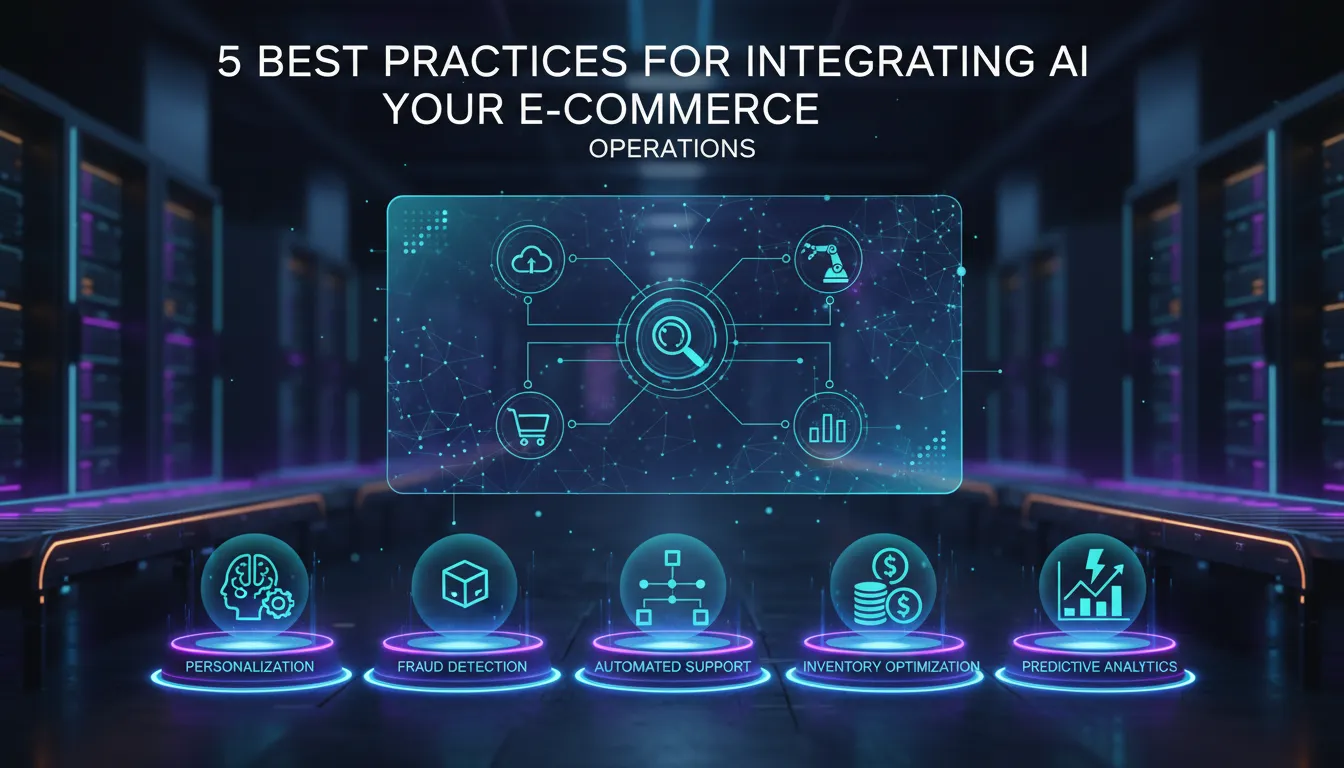
Many online stores now rely on artificial intelligence to improve operations, make smarter decisions, and provide better shopping experiences. It helps businesses adapt faster and meet customer expectations in a highly competitive market. Integrating AI the right way allows e-commerce companies to grow efficiently while avoiding costly mistakes.
This article explains practical methods to build a solid AI approach that fits business goals. It explores how data quality, teamwork, staff preparation, and customer-focused tools can shape a more effective operation. By applying these best practices, e-commerce teams can make AI a steady part of their daily success.
1. Develop a clear AI integration strategy aligned with business goals
A clear strategy helps an e-commerce business use AI in ways that match its overall objectives. It allows decision-makers to focus on solving real problems such as demand forecasting, product recommendations, or customer support. Aligning AI work with business outcomes also helps teams measure progress more accurately.
Leaders often begin by identifying where automation or prediction models can create measurable improvements. Consulting experts in artificial intelligence development services can help define the right mix of tools and approaches to fit existing systems. This step prevents wasted effort on features that do not add value to daily operations.
After setting clear goals, teams should outline data needs, timelines, and success metrics. Each department must understand how AI applications tie into its work. With the right communication and structure, the strategy turns abstract ideas into practical actions that improve efficiency and decision quality.
2. Guarantee high-quality, secure data for AI training and operations
AI in e-commerce depends on accurate and secure data. The system can only make sound predictions if the information it learns from is correct and consistent. Poor or unverified data introduces errors that can reduce the value of recommendations, personalization, and pricing models.
To maintain strong data quality, organizations should gather information from trusted sources and validate it regularly. They can remove duplicate or outdated entries, check for missing values, and confirm that product and customer data match across platforms. This process keeps models stable and predictable over time.
Data security also requires serious attention. Companies should use encryption, restricted access, and network protections to keep customer details and proprietary information safe. Compliance with recognized security standards helps protect against breaches. By keeping both quality and security in focus, businesses create a dependable foundation for AI systems that support smooth and confident e-commerce operations.
3. Collaborate closely with IT teams and AI solution vendors
Strong collaboration with IT teams helps align AI tools with existing systems. Clear roles help prevent confusion and speed up problem-solving. Both teams should agree on data handling, system updates, and performance goals.
AI vendors play a key role in this process. Regular meetings with vendors help keep the technology aligned with business needs. Transparent communication builds trust and helps identify issues early.
It helps to set clear expectations about support and customization. Technical staff should test new tools before full deployment to reduce risks. Shared feedback between teams and vendors often leads to smoother operations and better results.
Training sessions help everyone stay updated on system capabilities. This cooperation allows businesses to adapt faster to market changes. As a result, both internal teams and vendors work more efficiently toward the same goals.
4. Train staff thoroughly on AI tools and workflows
Employees must understand how AI tools fit into daily tasks before these systems deliver real value. Proper training helps teams use technology with confidence instead of frustration or confusion. It also reduces mistakes and delays during the transition to automated processes.
Training should cover both the purpose of each AI tool and its practical use. For example, staff should learn how recommendations, analytics, or automated responses affect customer interactions. Clear demonstrations and hands-on sessions allow them to apply new knowledge quickly.
Leaders should connect training goals to existing workflows. Step-by-step guidance helps staff see how AI supports sales, customer service, or supply chain tasks. This approach prevents resistance and promotes active participation.
After initial training, ongoing support keeps skills current. Regular refreshers, short tutorials, and open feedback channels allow employees to ask questions and share their experiences. As a result, teams adapt more easily while keeping operations consistent and accurate.
5. Leverage AI for personalized customer experiences
AI allows online stores to tailor interactions based on each shopper’s behavior, preferences, and purchase history. It can predict what customers might want next and suggest products that match their interests. This creates a smoother and more useful shopping process.
Retailers can use AI tools to guide customers through their journey with targeted recommendations or timely support. For example, virtual assistants can answer questions quickly and suggest related products, which helps customers feel recognized and valued.
AI also helps marketing teams send messages that fit each shopper’s needs. Instead of generic promotions, buyers receive updates that match their browsing patterns or previous orders. As a result, engagement often increases, and customers feel more connected to the brand.
Moreover, analyzing feedback data lets businesses identify what customers like or dislike. This information supports adjustments that make future experiences more relevant and satisfying.
Customer reviews are one of the most direct forms of feedback in this process. An automated Google review management software can send review requests after purchases, track new comments in real time, and organize feedback in a single place. AI features can read the tone of each review and suggest draft responses, so staff reply faster and keep a consistent, respectful voice across the profile. For e-commerce teams, this turns everyday reviews into a steady source of insight that supports more relevant messages, better service, and stronger long-term relationships.
Conclusion
Integrating AI into e-commerce operations helps businesses make smarter decisions based on real data. It improves accuracy in areas such as inventory control, pricing, and customer engagement. Each practice, defining goals, maintaining data quality, testing solutions, training staff, and monitoring results, plays a direct role in stable performance.
AI adoption should align with business objectives, not replace sound management judgment. A gradual rollout allows teams to track performance and make practical adjustments. Clear communication between departments increases the chance of steady progress.
By following these best practices, companies can use AI to support growth, improve workflows, and build stronger customer relationships. The result is a more efficient, data-driven business ready to handle future challenges with confidence.