H241: How Digital Contact Sharing Is Changing the Way We Connect
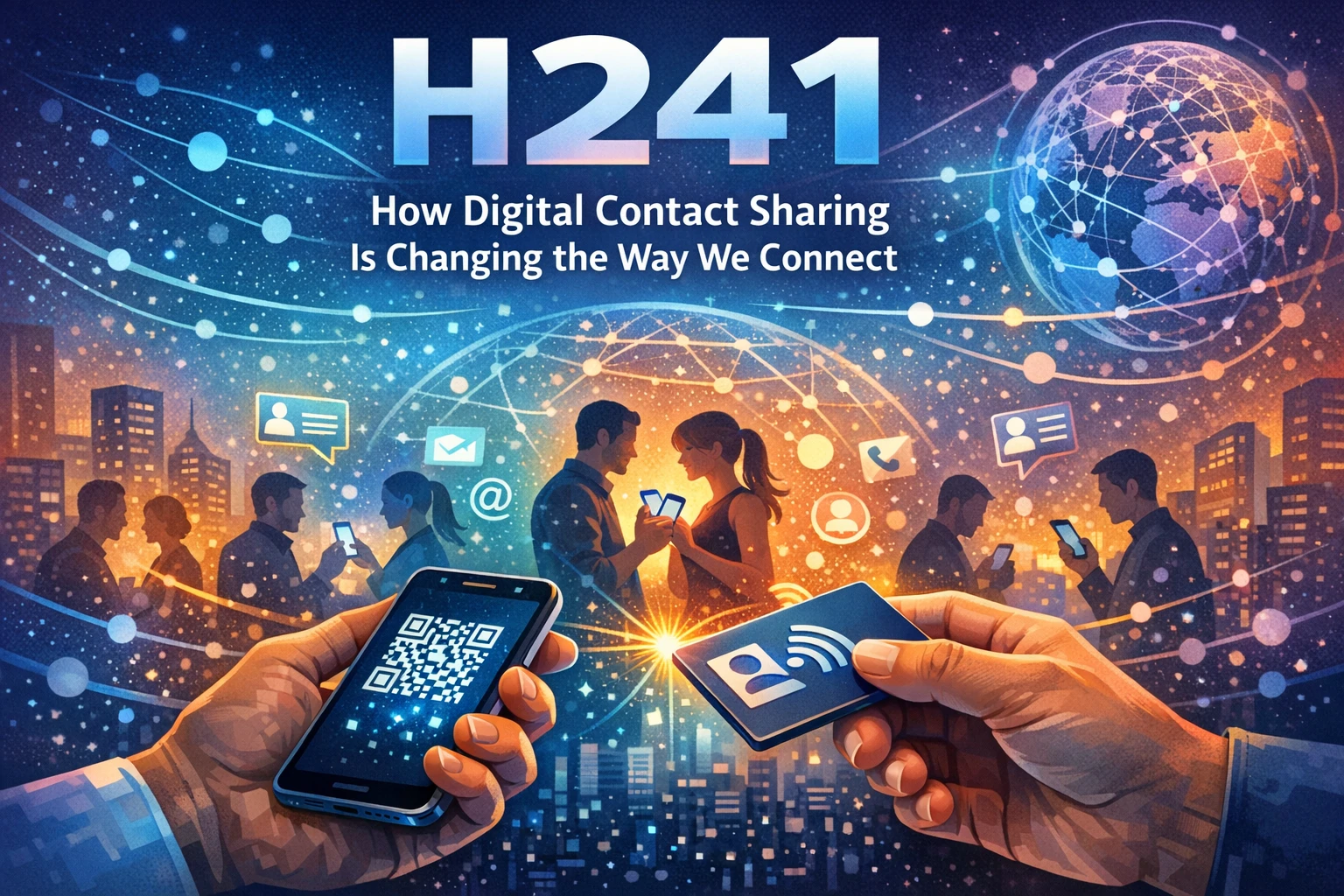
You’ve probably experienced it: you meet someone for coffee, at a conference, or during a networking event, exchange a few words, and agree to connect again. A reliable vCard QR code generator makes that moment easier by turning your contact details into a scannable digital profile that people can save instantly.
It felt promising, but a few days later, the connection was lost in the ether because data exchange was done sloppily, and you couldn’t get the information you needed. This is precisely the reason you should choose to share your contact details with a vCard QR code instead of using a business card or typing in another person’s details.
This evolution represents more than consumer convenience; it underscores how emerging digital behaviors, instantaneous communication, and accuracy are altering the way that relationships are both initiated and built within a connected society.
H241 and the Shift Toward Contactless Interaction
The rationale of H241 goes back to how we’ve been communicating over the past ten years: with smartphones in everybody’s pocket, and, therefore, it has become an everyday habit to scan QR codes. Be it anything, such as rail tickets, food menus, the need for contactless operation is becoming a standard rather than being controversial.
The broad uptake of smartphones conditioned people of all age groups to scan QR codes, which created an environment where using QR codes as a means for contactless exchange was not only acceptable, but a very natural process instead.
As people get more used to, and more demanding of, smooth interactions, the slow and/or manual methods will increasingly start to seem out of place.
How vCard QR Codes Work in Practice
A vCard QR code encodes your contact information in a structured digital format. When someone scans it, they can save your name, phone number, email address, company, and position on their device without having to type anything.
This eliminates any hesitation from the interaction. Instead of having to get out of the flow to share information, you can just scan, share, and keep the conversation going.
It’s this unobtrusiveness that makes the technology useful rather than obnoxious.
Why Traditional Contact Sharing Often Fails
Paper business cards are still around, but they’re inconvenient in today’s lifestyle. They get lost, wear out, get forgotten in bags and wallets, and, if they do survive all that, saving the information later often never happens.
Manual contact exchange creates another source of liability. A mistyped name, incorrect phone number, or missing information can silently break new or potentially rewarding interactions. These types of contact creation mistakes are common and difficult to detect. Digital contact exchange eliminates this source of liability by sharing information exactly as intended.
H241 and the Role of First Impressions
First impressions are about more than appearance; they're also about efficiency. You can make a statement by gracefully offering a QR code rather than scrambling for a pen or a card. It demonstrates that you're both respectful of your counterpart's time and prepared.
In the world of business, whether it's a sales meeting or a career fair, attendees’ first impressions of professionalism are influenced by countless external cues. Appearance, presentation skills, delivery of a message, ease of communication- these small micro-tells send signals.
H241 highlights the relationship between micro-moment contact sharing and what it communicates from a broader professional perception.
Where Digital Contact Sharing Delivers the Most Value
vCard QR codes are especially well-suited to busy, high-volume environments where many introductions happen. Professional conferences, tradeshows, industry workshops, and neighborhood socials share a need for rapid, frictionless experiences that don’t get in the way of the conversation.
Beyond gatherings, professionals integrate QR codes into daily touchpoints. Freelancers slip them into email signatures and proposals, consultants discreetly snip them onto the corners of presentation slides, and small business owners hang them beside reception desks or cash registers.
Many agencies backlink these tools to related resources likeQR code marketing, digital identity, or lead capture to develop a flowing touchpoint strategy across all channels.
Accuracy, Privacy, and User Control
Accuracy is a key selling point of QR-code-based contact exchange. The information saved is identical to what the user wants to share, with no transcription errors or forgotten field entries. Over time, this consistency is a valuable factor in improved follow-up success rates.
Privacy concerns also become less of an issue. A QR code for a vCard does not require account creation, nor the provision of account access to any third party. It simply delivers contact information, nothing more.
When the user knows that scanning does not equate to automatic data collection, they are less hesitant, leading to quicker adoption.
H241 and Long-Term Efficiency Gains
The true value of a vCard QR code becomes apparent over time with repeated use. If more people save your details right when you share them, the response rate goes up, and follow-ups feel more natural. Rather than starting over again, conversations continue.
Another benefit is adaptability. If your phone number changes or you get a new role, you can change your information instantly without needing to get a new QR code. From marketing and technology standpoints, you’re cutting waste and increasing reliability.
Integrating vCard QR Codes Into a Broader Digital Strategy
Digital contact sharing is at its best within an integrated ecosystem. That’s why vCard QR codes are a good match with websites, booking links, CRM systems, and email marketing tools. Every vCard QR code scan is a potential start of a structured customer or partner journey.
Many experts associate tools with educational content for tips on digital check-ins, mobile optimization, or contactless engagement to keep interactions moving in a sensible direction. A cohesive strategy builds rather than fractures relationships.
Final Thoughts on H241 and Meaningful Connections
The way contact details are exchanged often determines whether a connection survives beyond the first meeting. In a digital-first world, reducing friction is no longer optional.
Choosing to share your contact details with a vCard QR code aligns with modern habits, improves accuracy, and respects people’s time. Within the framework of H241, it represents a simple but powerful shift toward smarter, more human connections.
Sometimes the smallest changes are the ones that make relationships last.