What Does a Secure and Connected Digital Workplace for Healthcare Staff Look Like?
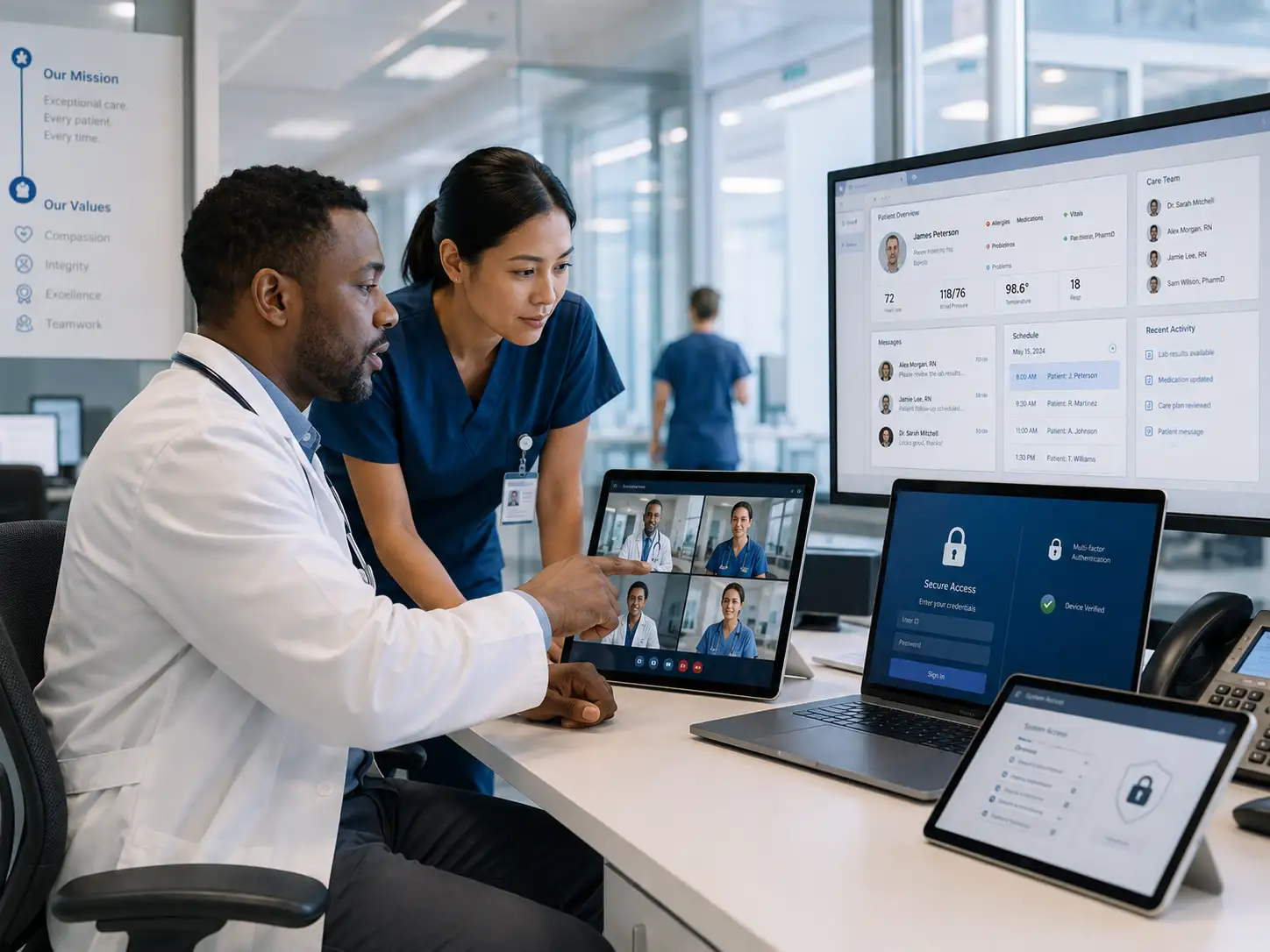
Healthcare professionals rely on technology throughout almost every part of the working day. From checking patient information and coordinating with colleagues to joining virtual consultations and accessing clinical systems, digital tools have become deeply embedded in modern healthcare.
However, simply introducing more technology does not automatically create a better working environment. A truly secure and connected digital workplace needs to make information easier to access, communication more efficient, and systems safer to use, all without adding unnecessary complexity for already busy healthcare staff.
So, what does an effective digital workplace actually look like?
Secure Access to the Right Information
Healthcare teams need fast access to accurate information, but that access also needs to be carefully controlled.
A secure digital workplace uses strong identity and access management processes to help ensure employees can reach the applications and data they need while protecting sensitive patient and organizational information. This step might include multi-factor authentication, secure sign-in systems, role-based permissions, and automated account management.
Security should ideally feel like part of the working environment rather than an obstacle. If staff constantly have to work around inconvenient systems, productivity can suffer, and security risks may increase.
Organizations therefore need to balance robust protection with ease of use.
Communication That Connects Different Teams
Healthcare environments rarely operate in isolation. Doctors, nurses, administrative staff, specialists, support teams, and external partners may all need to communicate with one another.
A connected digital workplace gives these groups reliable ways to collaborate, whether they are working in the same hospital, across multiple healthcare locations, or remotely.
Unified communication tools can bring messaging, video meetings, document sharing, calendars, and calling together in a more consistent environment. Instead of switching constantly between disconnected applications, employees can find information and communicate through fewer, better-integrated systems.
This can be especially valuable when decisions need to be made quickly.
Technology That Supports Hybrid and Mobile Working
Not every healthcare employee works from one desk or even one location.
Community healthcare workers, consultants, administrative teams, and other professionals may need to access systems from hospitals, clinics, offices, homes, or while traveling between locations. A modern digital workplace therefore needs to support secure access from different devices and environments.
Cloud-based services can play an important role here by making information and applications available wherever staff are authorized to work.
Organizations exploring how technology can support this type of working environment may benefit from working with specialists such as Cisilion.com, particularly when developing secure, connected technology environments for public healthcare organizations.
Reliable Devices and Infrastructure
Even the best software will struggle to deliver value if employees are working with slow devices, unreliable networks, or outdated infrastructure.
Healthcare organizations need dependable connectivity capable of supporting everything from everyday communication to cloud services, digital records, and video consultations.
Devices also need to be managed effectively. IT teams should be able to deploy security updates, monitor device health, manage applications, and respond quickly when equipment is lost, damaged, or compromised.
Reducing avoidable technical problems gives healthcare staff more time to focus on their responsibilities rather than troubleshooting technology.
Strong Cybersecurity Across the Workplace
Healthcare organizations hold highly sensitive information, making cybersecurity an essential part of the digital workplace.
Security should extend across users, devices, networks, applications, and data. Rather than relying on one defensive measure, organizations need multiple layers of protection.
This can include endpoint security, email protection, identity management, network monitoring, data encryption, threat detection, and regular security awareness training.
Healthcare employees also need to understand their role in protecting information. Clear guidance around phishing, passwords, suspicious communications, and data handling can strengthen the organization's overall security posture.
Tools That Reduce Administrative Pressure
A successful digital workplace should make everyday tasks simpler.
Healthcare staff often deal with considerable administrative workloads alongside their core responsibilities. Digital tools that automate routine processes, improve document management, or make information easier to locate can help reduce this burden.
For example, automated workflows can help manage approvals, internal requests, notifications, and document routing. Collaboration tools can reduce lengthy email chains, while centralized information resources can make policies and guidance easier to find.
Small improvements can add up to significant time savings across large healthcare organizations.
A Consistent User Experience
Technology works best when employees understand how to use it confidently.
Introducing too many disconnected systems can leave staff juggling different passwords, interfaces, and processes. A connected digital workplace aims to create greater consistency so employees know where to communicate, where to access documents, and how to complete common tasks.
Training and ongoing support are equally important. Even well-designed technology may fail to deliver its full value if employees do not understand how it fits into their daily work.
Building a Workplace Around Healthcare Staff
A secure and connected digital workplace is not simply a collection of new technologies. It is an environment designed around the people who rely on those technologies every day.
For healthcare organizations, that means combining strong cybersecurity with reliable infrastructure, effective communication tools, flexible access, and simple user experiences.
When those elements work together, technology can become less of a distraction and more of an enabler, helping healthcare staff collaborate effectively, access important information securely, and ultimately spend more time focusing on patient care.